ABV Calculator
Estimate ABV from original and final gravity, with apparent attenuation and gravity drop shown alongside the result.
Use this ABV calculator to estimate alcohol by volume from your original gravity and final gravity readings.
Enter OG and FG below and the calculator will also show apparent attenuation and the total gravity drop.
Estimate alcohol by volume from OG and FG
Enter your original gravity and final gravity to estimate the alcohol content, apparent attenuation and total gravity drop.
Gravity before fermentation.
Gravity after fermentation.
ABV is an estimate based on the change between original and final gravity. Temperature-corrected hydrometer readings will give you a better basis for the calculation.
How to use the ABV calculator
Enter your original gravity (OG) from before fermentation and your final gravity (FG) after fermentation.
The calculator estimates ABV from the difference between those two readings.
For example:
OG: 1.050
FG: 1.010
gives an estimated 5.3% ABV.
The same numbers also give about 80% apparent attenuation and a gravity drop of 40 points.
What OG and FG tell you
Original gravity tells you how dense the wort was before fermentation.
Final gravity tells you how much the density changed after fermentation.
That drop happens mainly because yeast consumes fermentable sugars and produces alcohol and CO₂.
The larger the difference between OG and FG, the more alcohol was generally produced.
That is why two gravity readings are enough to make a useful ABV estimate.
Why is the result only an estimate?
The common homebrew formula is:
ABV = (OG − FG) × 131.25
It works well as a practical brewing estimate, but it is still an approximation. Other formulas exist, especially for stronger beers, and they can give slightly different results from the same OG and FG. Brewer’s Friend documents both the standard formula and a more complex alternative, and notes that the difference becomes more noticeable at higher gravity.
For normal homebrew use, I prefer keeping the calculator simple and consistent rather than giving you two slightly different answers and asking you to choose between them.
Your gravity readings matter more than extra decimal places
The calculator can only work with the numbers you give it.
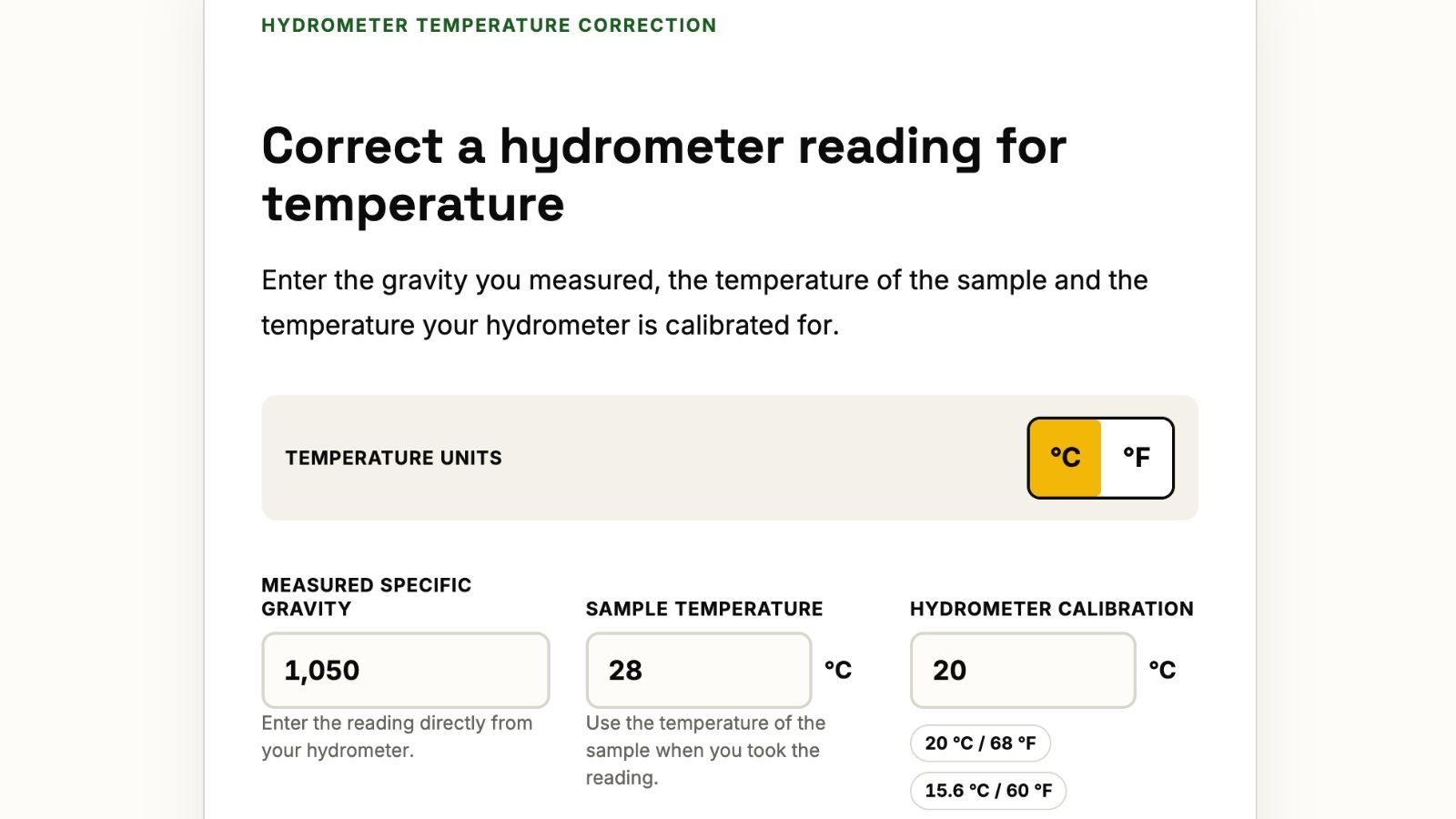
If your hydrometer reading was taken well away from its calibration temperature, correct that first.
That is exactly what the Hydrometer Temperature Correction Calculator is for.
A cleaner gravity reading is more useful than arguing over whether an ABV formula should give 5.2% or 5.3%.
What is apparent attenuation?
Apparent attenuation shows how much the gravity dropped compared with the original gravity.
For example, if a beer drops from 1.050 to 1.010, the apparent attenuation is about 80%.
It is called apparent attenuation because alcohol changes the density of the finished beer, so it is not a direct measurement of the exact percentage of sugar consumed.
For normal brewing notes, though, it is a very useful number for comparing fermentation performance.
A simple rule of thumb
Use measured OG and FG whenever possible.
Correct hydrometer readings for temperature if needed, then use the same ABV method consistently from batch to batch.
The exact number is an estimate.
Consistency is what makes it useful.
ABV Calculator FAQ
Can I calculate ABV from OG alone?
No. You need both OG and FG because ABV is estimated from the change in gravity during fermentation.
Should I use gravity before or after priming sugar?
Use the final gravity reading before adding priming sugar. Brewer’s Friend also specifies FG before priming sugar for its ABV calculation.
Why does another ABV calculator give a different answer?
Some calculators use a different ABV formula or round numbers differently.
For ordinary-strength homebrew, the differences are usually small. At higher gravities, different formulas can diverge more.
Does bottle conditioning add alcohol?
Yes, bottle conditioning creates a small additional amount of alcohol because the priming sugar ferments in the bottle.
This calculator estimates ABV from OG and FG before priming, so it does not include that small increase.
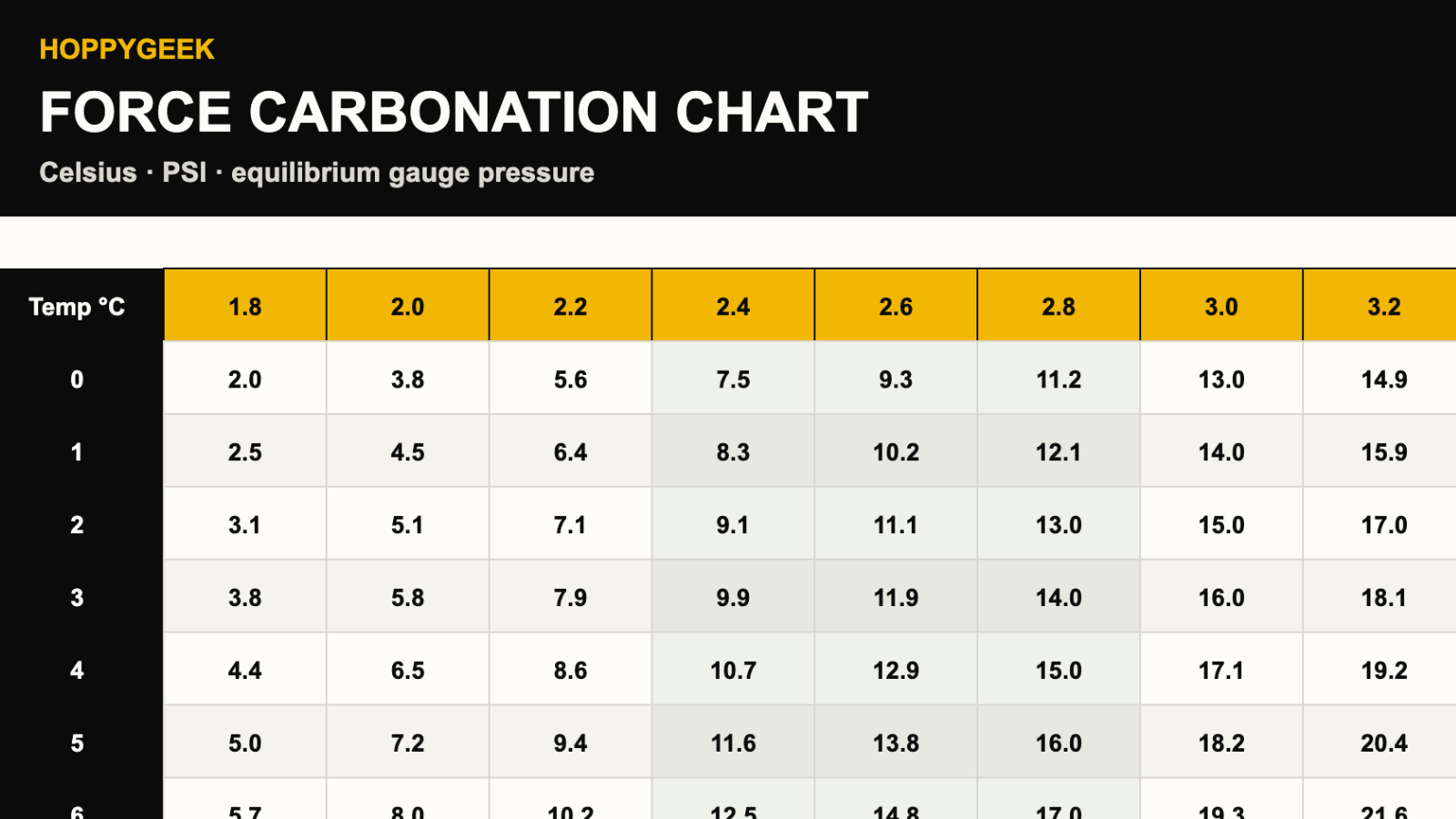
Looking for another quick brewing calculation? Browse my Brewing Tools for carbonation, measurements and other brew-day numbers.
References
- Brewer’s Friend — Alcohol By Volume ABV Calculator — accessed October 4, 2026.
- Brewer’s Friend — Alcohol By Volume Calculator Updated — accessed October 4, 2026.
- Brew Your Own — Fermentability: Advanced Brewing — accessed October 4, 2026.