Priming Sugar Calculator
A practical priming sugar calculator for bottle conditioning, with flexible units, common sugar types and clear carbonation targets.
Use this priming sugar calculator to work out how much sugar to add when bottle conditioning beer. Enter the amount of beer you are packaging, the highest temperature it reached near the end of fermentation, your target carbonation and the sugar you want to use.
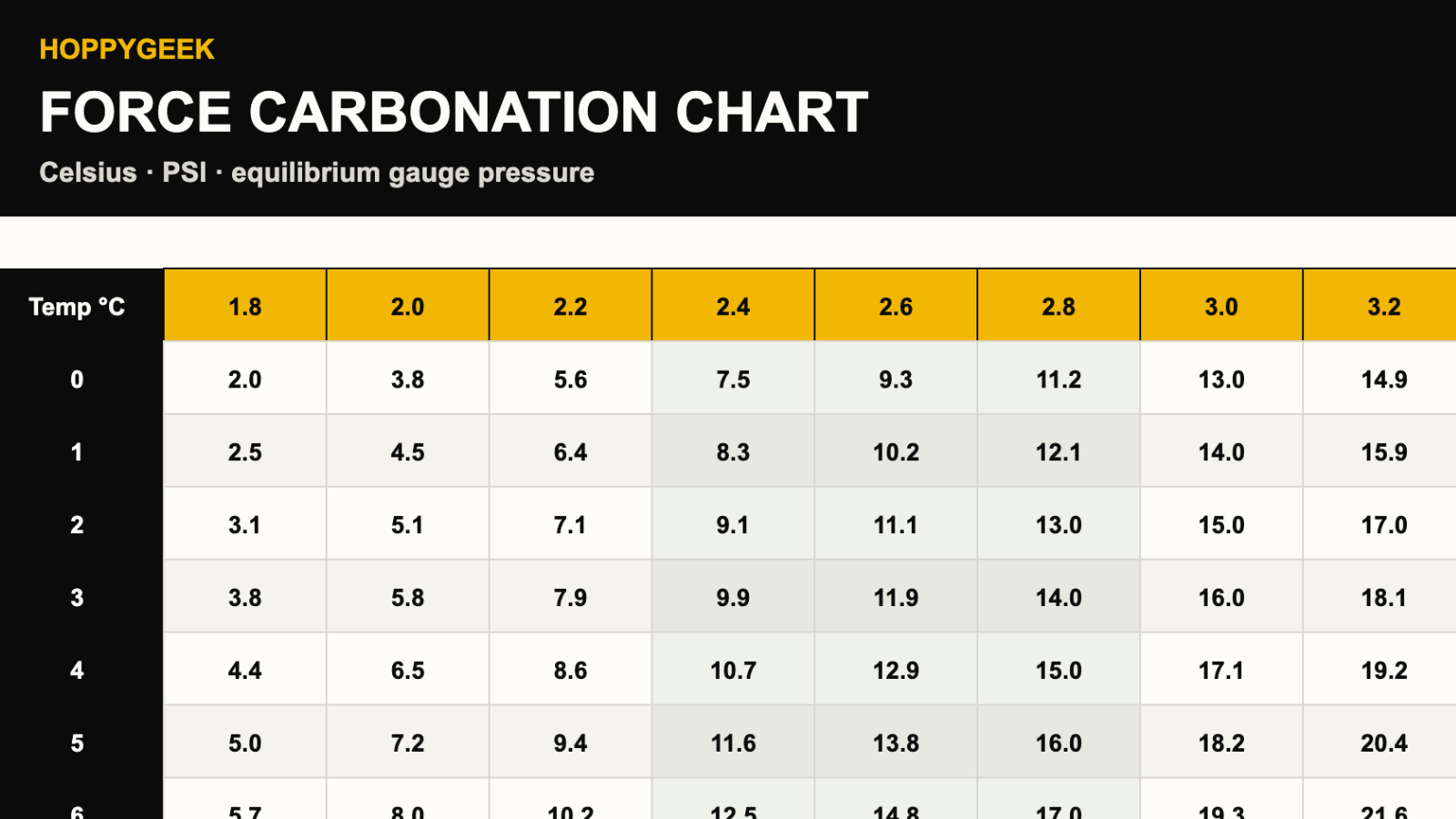
Kegging instead? Use my Force Carbonation Calculator to find the correct CO₂ regulator pressure for your beer.
Calculate priming sugar by weight
Enter the amount of beer you are packaging, the warmest temperature it reached near the end of fermentation, and your target carbonation.
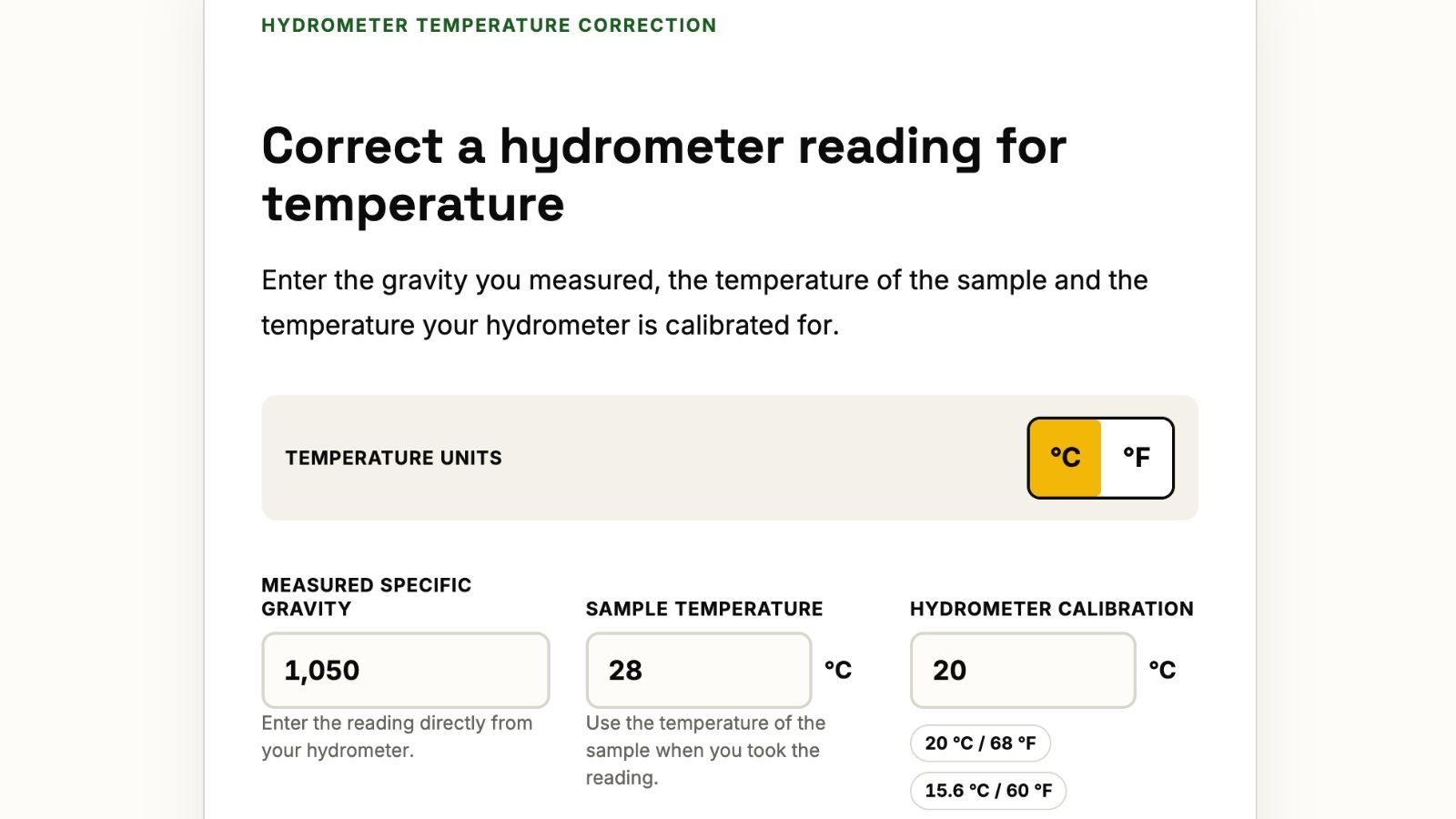
Use the highest temperature the beer reached near the end of fermentation, even if you cold crashed it afterward.
DME is an estimate. Fermentability varies between extracts, so the result is less exact than for pure sucrose or dextrose.
Priming sugar is calculated by weight. The calculator estimates the CO₂ already dissolved in the beer from its late-fermentation temperature and adds only enough fermentable sugar to reach your target.
Only package beer after fermentation is complete. Too much fermentable sugar or unfinished fermentation can create dangerous package pressure.
Use bottles and closures designed for the carbonation level you are targeting.
How to use the priming sugar calculator
Measure the actual amount of beer you are going to package, rather than relying on the original recipe batch size. Choose your preferred volume and temperature units, enter your carbonation target in volumes of CO₂, and select the priming sugar you are using.
For temperature, use the highest temperature the beer reached near the end of fermentation. If you cold crashed afterward, do not use the cold-crash temperature. The calculator uses this value to estimate how much CO₂ is already dissolved in the beer by fermentation alone.
How much priming sugar do I need?
There is no single correct amount of priming sugar for every batch. The amount depends on four things: how much beer you are packaging, how much carbonation you want, how much CO₂ is already dissolved in the beer, and which sugar you use.
For example, 20 L of beer at 20 °C targeting 2.4 volumes of CO₂ needs about 118 g of table sugar with the model used by this calculator.
Why beer temperature matters
Fermentation leaves some CO₂ dissolved in the beer. Warmer beer retains less of it, so temperature gives us a practical way to estimate the residual carbonation before priming.
You do not need to measure dissolved CO₂ yourself. The calculator estimates it from the temperature you enter and subtracts that from your target before calculating the amount of sugar required.
Which priming sugar should I use?
Table sugar / sucrose
Plain white table sugar is predictable, fully fermentable and widely available. It also requires slightly less weight than dextrose to produce the same amount of CO₂.
Dextrose monohydrate / corn sugar
Dextrose monohydrate is commonly sold as corn sugar or brewing sugar. Because part of its weight is bound water, you need slightly more of it than sucrose for the same carbonation level.
Anhydrous dextrose / glucose
Anhydrous glucose contains no bound water, so it is not identical to dextrose monohydrate by weight. The calculator treats them separately rather than assuming all “dextrose” products are the same.
Dry malt extract
DME can be used for priming, but its fermentability varies more than pure sugars. For that reason, the calculator marks DME results as an estimate.
Why doesn’t the calculator include honey, maple syrup or molasses?
Honey, maple syrup, molasses, treacle, corn syrup, Belgian candi syrup and similar products can all contain fermentable sugar, but their water content and sugar composition can vary between products.
A calculator can assign them a generic conversion factor, but that can make the result look more precise than it really is. I would rather give you fewer sugar options that I can model with reasonable confidence than a long dropdown full of assumptions.
What does “volumes of CO₂” mean?
Carbonation is commonly expressed as volumes of CO₂. A beer at 2.4 volumes contains roughly 2.4 litres of dissolved CO₂ for every litre of beer under standard conditions.
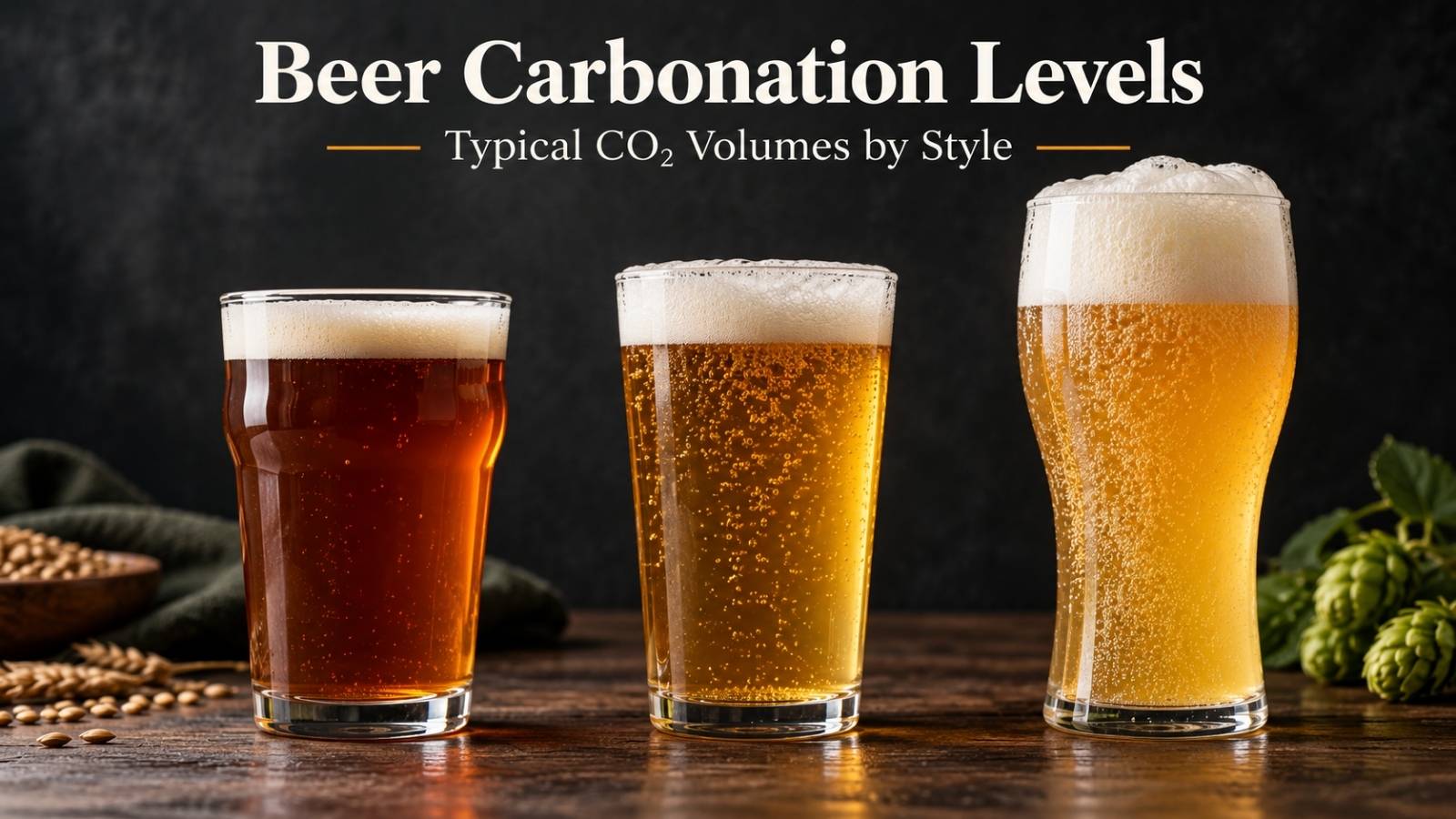
Different beer styles are traditionally served at different carbonation levels. If you are unsure what target to use, see my Beer Carbonation Levels guide for typical ranges by style.
Priming sugar and bottle safety
Only prime beer once fermentation is genuinely complete. Priming sugar is an intentional new fermentation inside a sealed package, so unfinished fermentation plus added sugar can produce much more pressure than expected.
Higher carbonation also requires bottles and closures designed to handle higher pressure. If you are unsure about the strength of a bottle, do not push it toward high Belgian- or wheat-beer carbonation levels.
Priming Sugar Calculator FAQ
Can I use table sugar for priming beer?
Yes. Plain white table sugar, or sucrose, works very well for bottle conditioning. It is predictable, fully fermentable and easy to find.
You normally need a little less sucrose by weight than dextrose monohydrate to reach the same carbonation level.
Should I use bottling temperature or fermentation temperature?
Use the highest temperature the beer reached near the end of fermentation.
If you cold crashed the beer afterward, do not use the cold-crash temperature. Cooling the beer makes it capable of holding more CO₂, but it does not automatically mean that extra CO₂ has dissolved back into the beer.
The calculator uses this temperature to estimate the residual CO₂ already present before priming.
Can I use this priming sugar calculator for a keg?
Yes, if you are naturally conditioning the beer in the keg with priming sugar.
If you are force carbonating with a CO₂ cylinder and regulator instead, use the Force Carbonation Calculator rather than adding priming sugar.
Can I add priming sugar directly to each bottle?
You can, but this calculator is designed primarily for bulk priming based on the total volume of beer you are packaging.
With bulk priming, the calculated sugar is dissolved, mixed evenly into the beer and then bottled. That makes it easier to keep carbonation consistent from bottle to bottle.
Direct bottle dosing can work, but it requires accurate measurement for every bottle.
What happens if I use too much priming sugar?
Too much priming sugar can produce excessive carbonation and pressure inside the bottle.
In mild cases that means gushers or over-carbonated beer. In more serious cases, bottles can fail under pressure.
Only package beer once fermentation is complete, and use bottles and closures suitable for the carbonation level you are targeting.
References
- Brew Your Own — Carbonation Priming Chart — accessed October 4, 2026.
- Brewer’s Friend — Beer Priming Sugar Calculator — accessed October 4, 2026.
- MoreBeer — Priming Bottled Beer for Consistency and Reproducibility — Dave Draper and Mark Hibberd — accessed October 4, 2026.
- Brewers Association — Preventing Package Over-Pressurization — accessed October 4, 2026.