Force Carbonation Chart: PSI, Bar, °C & °F
Calculate the correct CO₂ pressure for force carbonating beer using Celsius or Fahrenheit and PSI or bar, with downloadable carbonation charts.
I made this tool because I kept doing the same thing every time I kegged a beer: searching for a force carbonation chart, finding one in the wrong units, and converting something in my head.
My own setup is slightly awkward in that way. I think about beer temperature in Celsius, but I prefer to set the pressure on my CO₂ regulator in PSI.
So instead of making another chart that assumes you want everything metric or everything imperial, I made this one flexible. Temperature and pressure units are independent. Use °C with PSI, °C with bar, °F with PSI, or °F with bar.
Bottling instead? Use my Priming Sugar Calculator to calculate the right amount of sugar for bottle conditioning.
Find your regulator pressure
Enter the temperature of the beer and the carbonation level you want. Choose your temperature and pressure units independently.
Gauge pressure — the reading on a normal CO₂ regulator.
Advanced: altitude correction
The standard chart assumes sea level. At higher elevation, slightly more gauge pressure is required.
4.0 °C · 2.4 volumes CO₂
Equilibrium pressure: this is a set-and-forget value using 100% CO₂, not a burst-carbonation pressure.
How to use the calculator
Measure the actual beer temperature, choose your target carbonation in volumes of CO₂, and select the pressure unit used by your regulator.
The result is the equilibrium pressure for 100% CO₂ — the pressure you can set and leave connected while the beer gradually reaches your target carbonation.
For example, 4 °C and 2.4 volumes CO₂ is about 10.7 PSI / 0.74 bar.
Prefer a chart you can keep next to the keg instead? That’s exactly what I wanted too.
Force Carbonation Chart: Celsius & Bar
Find the beer temperature on the left and your target carbonation across the top. The cell where they meet is the required regulator pressure in bar.
| Temp °C | 1.8 | 2.0 | 2.2 | 2.4 | 2.6 | 2.8 | 3.0 | 3.2 |
|---|---|---|---|---|---|---|---|---|
| 0 | 0.13 | 0.26 | 0.39 | 0.52 | 0.64 | 0.77 | 0.90 | 1.03 |
| 1 | 0.18 | 0.31 | 0.44 | 0.57 | 0.70 | 0.83 | 0.97 | 1.10 |
| 2 | 0.22 | 0.35 | 0.49 | 0.63 | 0.76 | 0.90 | 1.04 | 1.17 |
| 3 | 0.26 | 0.40 | 0.54 | 0.68 | 0.82 | 0.96 | 1.11 | 1.25 |
| 4 | 0.30 | 0.45 | 0.60 | 0.74 | 0.89 | 1.03 | 1.18 | 1.33 |
| 5 | 0.35 | 0.50 | 0.65 | 0.80 | 0.95 | 1.10 | 1.25 | 1.40 |
| 6 | 0.39 | 0.55 | 0.71 | 0.86 | 1.02 | 1.17 | 1.33 | 1.49 |
| 7 | 0.44 | 0.60 | 0.76 | 0.93 | 1.09 | 1.25 | 1.41 | 1.57 |
| 8 | 0.49 | 0.66 | 0.82 | 0.99 | 1.16 | 1.32 | 1.49 | 1.66 |
| 9 | 0.54 | 0.71 | 0.88 | 1.06 | 1.23 | 1.40 | 1.57 | 1.74 |
| 10 | 0.59 | 0.77 | 0.95 | 1.12 | 1.30 | 1.48 | 1.66 | 1.83 |
| 11 | 0.64 | 0.83 | 1.01 | 1.19 | 1.38 | 1.56 | 1.74 | 1.93 |
| 12 | 0.69 | 0.88 | 1.07 | 1.26 | 1.45 | 1.64 | 1.83 | 2.02 |
| 13 | 0.75 | 0.94 | 1.14 | 1.33 | 1.53 | 1.73 | 1.92 | 2.12 |
| 14 | 0.80 | 1.01 | 1.21 | 1.41 | 1.61 | 1.81 | 2.01 | 2.21 |
| 15 | 0.86 | 1.07 | 1.28 | 1.48 | 1.69 | 1.90 | 2.11 | 2.31 |
100% CO₂ · equilibrium gauge pressure in bar · sea-level reference
Force Carbonation Chart: Fahrenheit & PSI
Find the beer temperature on the left and your target carbonation across the top. The cell where they meet is the required regulator pressure in PSI.
| Temp °F | 1.8 | 2.0 | 2.2 | 2.4 | 2.6 | 2.8 | 3.0 | 3.2 |
|---|---|---|---|---|---|---|---|---|
| 32 | 2.0 | 3.8 | 5.6 | 7.5 | 9.3 | 11.2 | 13.0 | 14.9 |
| 33 | 2.3 | 4.2 | 6.0 | 7.9 | 9.8 | 11.7 | 13.6 | 15.5 |
| 34 | 2.6 | 4.5 | 6.4 | 8.4 | 10.3 | 12.2 | 14.1 | 16.0 |
| 35 | 2.9 | 4.9 | 6.9 | 8.8 | 10.8 | 12.7 | 14.7 | 16.6 |
| 36 | 3.3 | 5.3 | 7.3 | 9.3 | 11.3 | 13.2 | 15.2 | 17.2 |
| 37 | 3.6 | 5.7 | 7.7 | 9.7 | 11.7 | 13.8 | 15.8 | 17.8 |
| 38 | 4.0 | 6.0 | 8.1 | 10.2 | 12.3 | 14.3 | 16.4 | 18.5 |
| 39 | 4.3 | 6.4 | 8.5 | 10.7 | 12.8 | 14.9 | 17.0 | 19.1 |
| 40 | 4.7 | 6.8 | 9.0 | 11.1 | 13.3 | 15.4 | 17.6 | 19.7 |
| 41 | 5.0 | 7.2 | 9.4 | 11.6 | 13.8 | 16.0 | 18.2 | 20.4 |
| 42 | 5.4 | 7.6 | 9.9 | 12.1 | 14.3 | 16.6 | 18.8 | 21.0 |
| 43 | 5.8 | 8.1 | 10.3 | 12.6 | 14.9 | 17.2 | 19.4 | 21.7 |
| 44 | 6.2 | 8.5 | 10.8 | 13.1 | 15.4 | 17.7 | 20.1 | 22.4 |
| 45 | 6.6 | 8.9 | 11.3 | 13.6 | 16.0 | 18.3 | 20.7 | 23.1 |
| 46 | 6.9 | 9.3 | 11.7 | 14.1 | 16.5 | 18.9 | 21.3 | 23.7 |
| 47 | 7.3 | 9.8 | 12.2 | 14.7 | 17.1 | 19.6 | 22.0 | 24.4 |
| 48 | 7.7 | 10.2 | 12.7 | 15.2 | 17.7 | 20.2 | 22.7 | 25.2 |
| 49 | 8.1 | 10.7 | 13.2 | 15.7 | 18.3 | 20.8 | 23.3 | 25.9 |
| 50 | 8.6 | 11.1 | 13.7 | 16.3 | 18.9 | 21.4 | 24.0 | 26.6 |
| 51 | 9.0 | 11.6 | 14.2 | 16.8 | 19.5 | 22.1 | 24.7 | 27.3 |
| 52 | 9.4 | 12.1 | 14.7 | 17.4 | 20.1 | 22.7 | 25.4 | 28.1 |
| 53 | 9.8 | 12.5 | 15.3 | 18.0 | 20.7 | 23.4 | 26.1 | 28.8 |
| 54 | 10.2 | 13.0 | 15.8 | 18.5 | 21.3 | 24.1 | 26.8 | 29.6 |
| 55 | 10.7 | 13.5 | 16.3 | 19.1 | 21.9 | 24.8 | 27.6 | 30.4 |
| 56 | 11.1 | 14.0 | 16.8 | 19.7 | 22.6 | 25.4 | 28.3 | 31.2 |
| 57 | 11.6 | 14.5 | 17.4 | 20.3 | 23.2 | 26.1 | 29.0 | 32.0 |
| 58 | 12.0 | 15.0 | 17.9 | 20.9 | 23.9 | 26.8 | 29.8 | 32.8 |
| 59 | 12.5 | 15.5 | 18.5 | 21.5 | 24.5 | 27.5 | 30.6 | 33.6 |
100% CO₂ · equilibrium gauge pressure in PSI · sea-level reference
Celsius + PSI?
That's actually the combination I use myself: beer temperature in Celsius, but a CO₂ regulator marked in PSI.
You can use that combination directly in the calculator above, or download a dedicated chart here.
Never exceed the rated working pressure of your keg, regulator, hoses, fittings or other pressurised equipment.
CO₂ can displace oxygen. Use cylinders and pressurised systems in adequately ventilated areas.
Why temperature matters
Colder beer holds CO₂ more easily than warmer beer.
So for the same carbonation level, cold beer needs less pressure and warm beer needs more pressure.
That is why there is no single correct PSI or bar setting for a keg. Temperature, pressure and the amount of dissolved CO₂ all work together.
Change one, and the equilibrium changes.
What are volumes of CO₂?
Volumes of CO₂ describe how much carbon dioxide is dissolved in the beer.
A higher number means more carbonation. Something around 2.4 volumes might be perfectly normal for one beer, while another beer may be better with considerably less or more.
You don’t need to convert volumes into anything else to use this tool. Pick the carbonation level you want, measure the beer temperature, and the calculator gives you the corresponding regulator pressure.
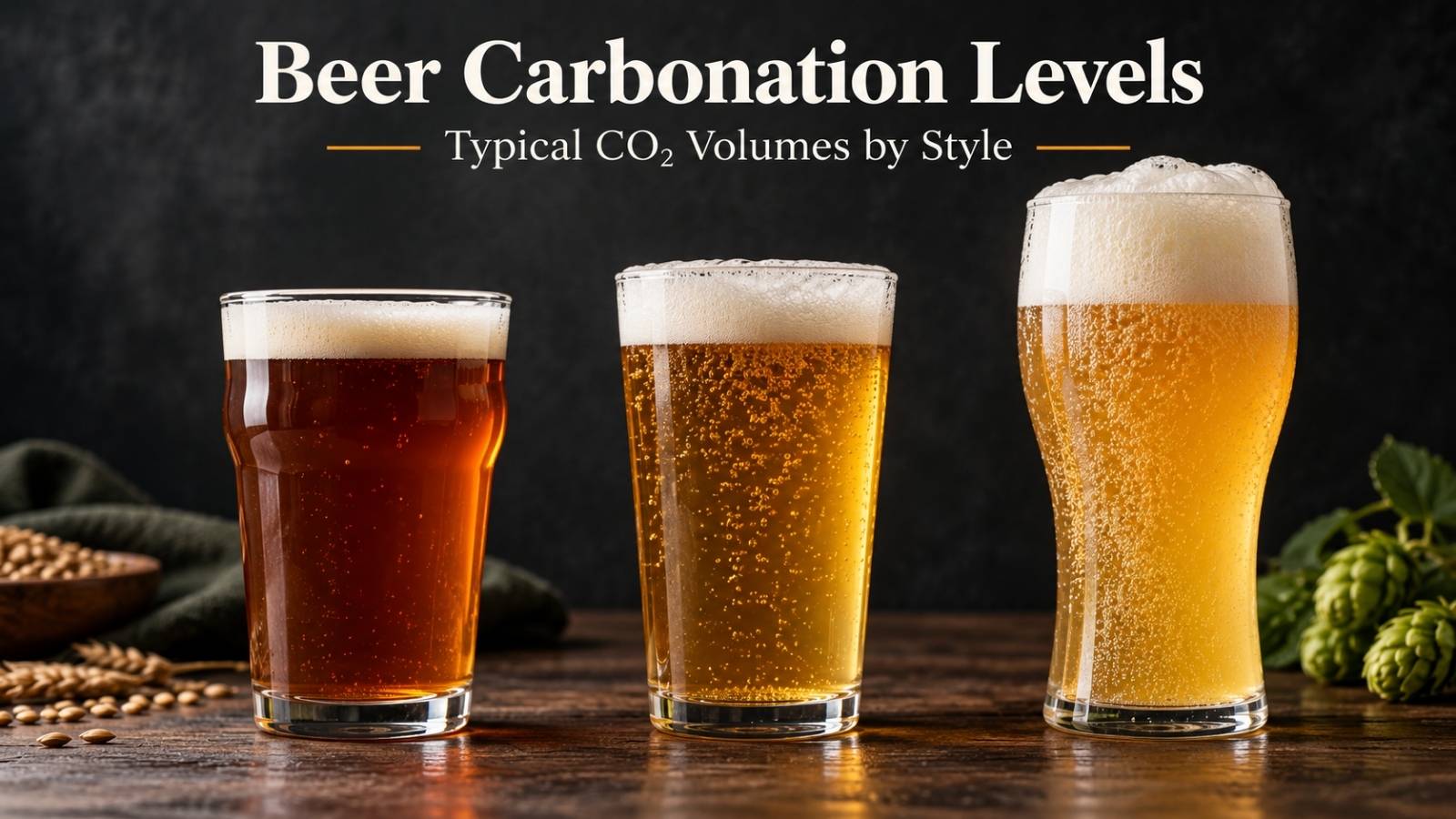
Not sure which CO₂ volume to target in the first place? See my guide to typical beer carbonation levels by style.
This is set-and-forget pressure
The calculator shows equilibrium pressure.
It is not telling you what pressure to use for burst carbonation, shaking the keg, rolling it around or other methods designed to force CO₂ into solution faster.
Those methods deliberately use pressures above the final equilibrium pressure and can overshoot if you leave them too long.
For ordinary set-and-forget carbonation, set the calculated pressure, leave the CO₂ connected and let the beer gradually get there.
There isn’t one exact countdown for this. Starting carbonation, temperature, headspace, agitation and your equipment all affect how quickly equilibrium is reached.
PSI, PSIG and altitude
I call the pressure PSI because that’s what most of us see on the regulator.
Technically, it is gauge pressure — PSIG — meaning pressure above the surrounding atmospheric pressure. Bar values in the tool are gauge pressure too.
The standard charts assume approximately sea-level atmospheric pressure.
If you brew significantly above sea level, open Advanced: altitude correction in the calculator. The downloadable charts remain simple sea-level references.
How accurate is the calculator?
The calculator is based on the equilibrium equation published in Brewers Association draught-system training material.
The interactive calculator, HTML charts and downloadable charts all use the same pressure-temperature relationship.
You may see another published carbonation table differ by around 0.1–0.2 PSI in places. That’s normal: printed tables contain rounded temperatures and pressures, while the calculator works from the continuous equation before rounding the displayed answer.
For normal homebrew use, that difference is smaller than the practical precision of most regulator gauges anyway.
The calculator assumes 100% CO₂. If you use a nitrogen/CO₂ blend, total regulator pressure cannot be entered directly because carbonation depends on the CO₂ partial pressure.
The rule I actually remember
I don’t memorise carbonation charts.
I remember this:
Colder beer → less pressure.
Warmer beer → more pressure.
More carbonation → more pressure.
Then I let the calculator handle the numbers.
That’s why I built it.
References
- Brewers Association — Facts About Draught Beer Carbonation — accessed September 30, 2026.
- Brewers Association — Foundations of Building a Draught System: From Carbonation to Dispense Gas and System Resistance — Craft Brewers Conference 2024 — accessed September 30, 2026.
- Brew Your Own — Forced Carbonation — Dave Green — accessed September 30, 2026.
- Occupational Safety and Health Administration — Potential Carbon Dioxide (CO₂) Asphyxiation Hazard When Filling Stationary Low Pressure CO₂ Supply Systems — accessed September 30, 2026.