Hoppy Amber Brew Day on the Grainfather G30
A hop-forward amber ale brewed on the Grainfather G30. Citra and Sabro dry hops and a few brew-day quirks along the way.
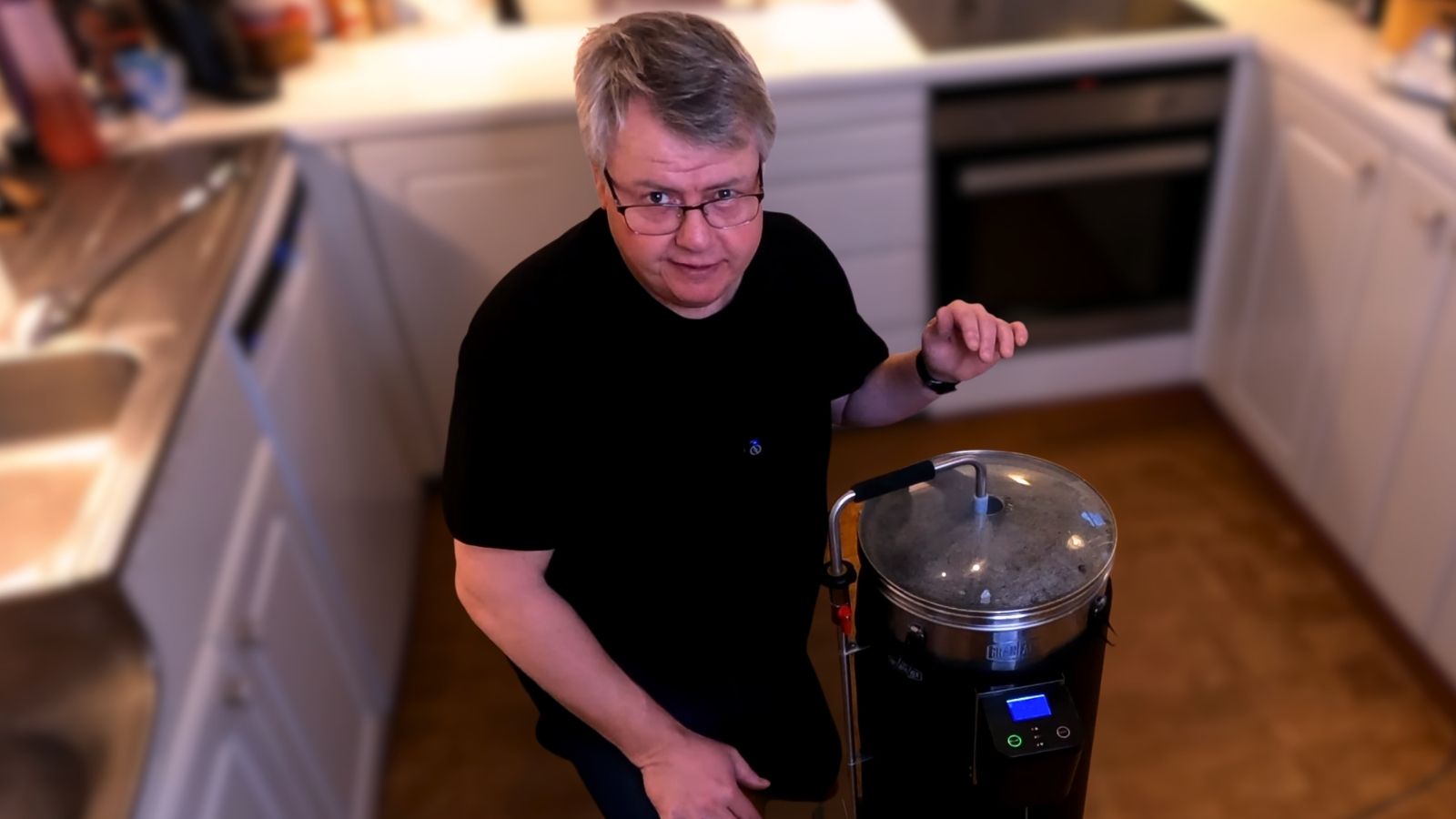
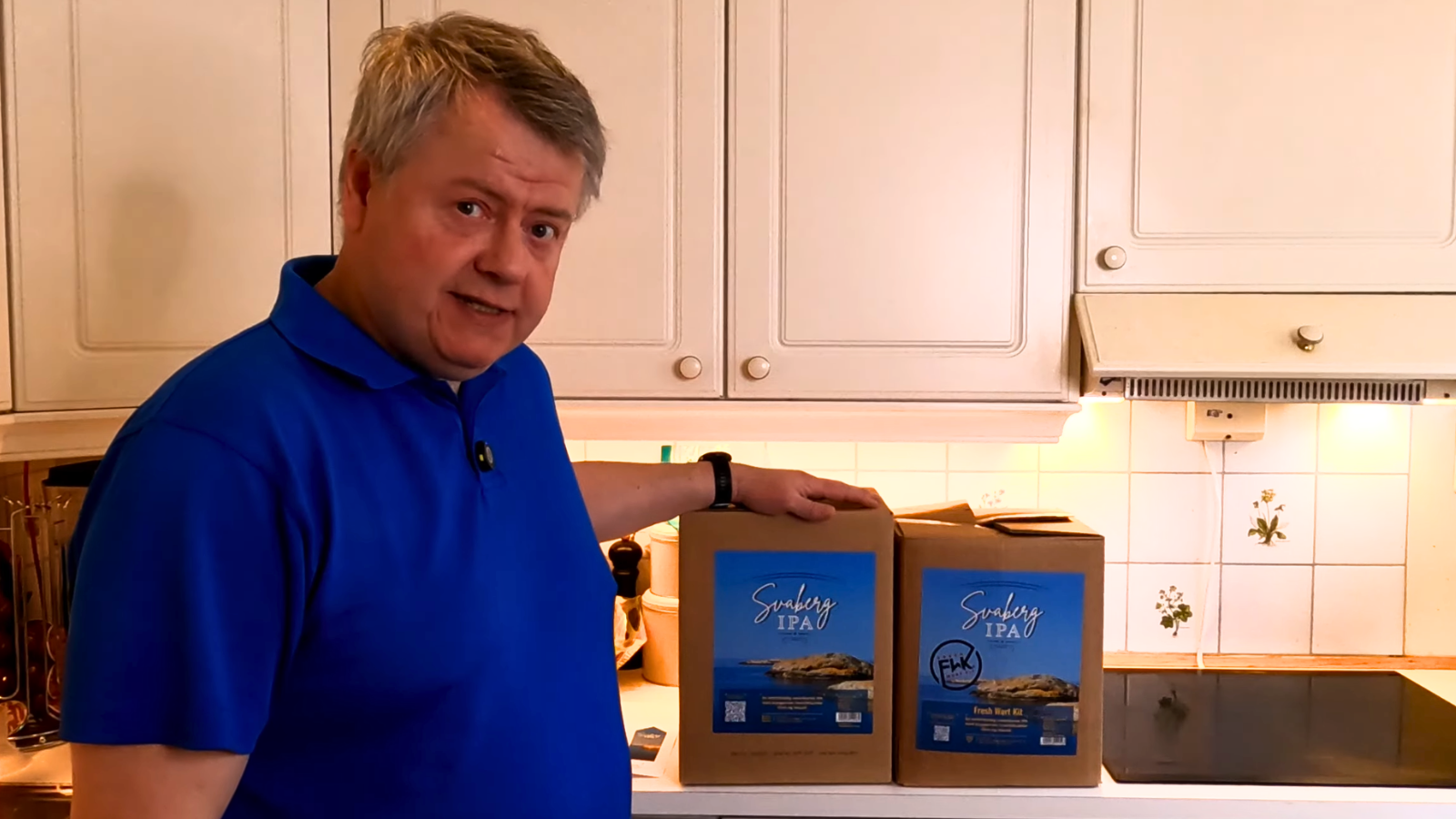
This Hoppy Amber brew day started with a recipe that isn’t my own. It’s a collaboration between a homebrewer from Moss, brewing under the name Rusty Pig Breweries, and the Norwegian homebrew shop ølbrygging.no. You can view the recipe I used here.
It’s an amber ale with a surprising amount of hops, almost IPA-like, and since I love IPA, that’s what got me curious about it. The kit box describes the beer as having a citrusy, hop-forward aroma, a balanced malt profile and a nice color, and suggests it as a food beer for things like barbecue and pizza.
The beer gets 200 grams of dry hops after seven days, using Citra, which I’ve brewed with plenty of times, and Sabro, which is new to me. Both can bring citrus character, so I was particularly curious to see what Sabro would add.
If you want to learn more about that, I’ve written a separate guide on what actually matters when dry hopping, including timing, oxygen and hop creep.
Prefer to watch the Hoppy Amber brew day? The video is in Norwegian, with subtitles in English available. Here’s the original brew from start to finish.
Into the mash
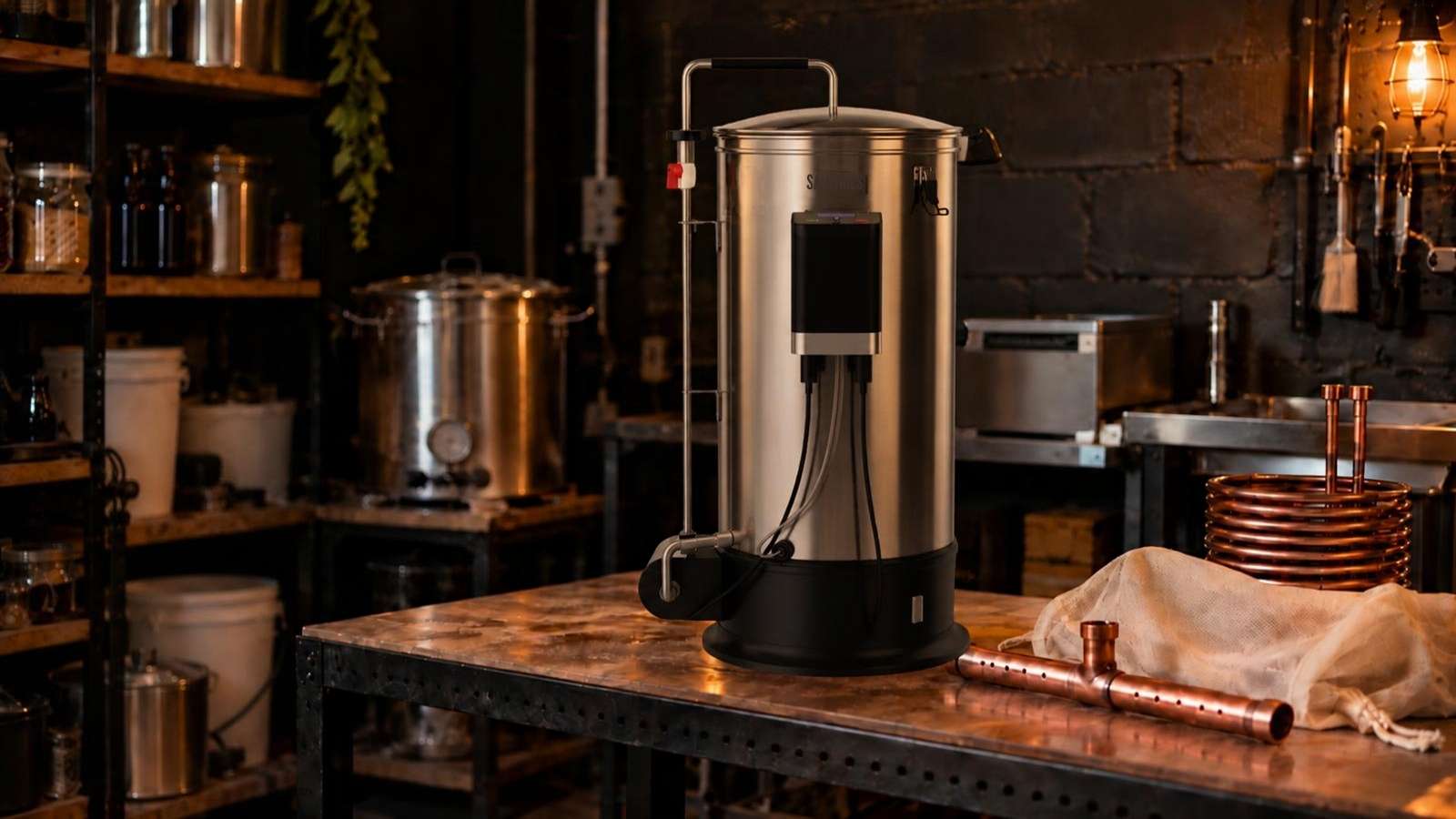
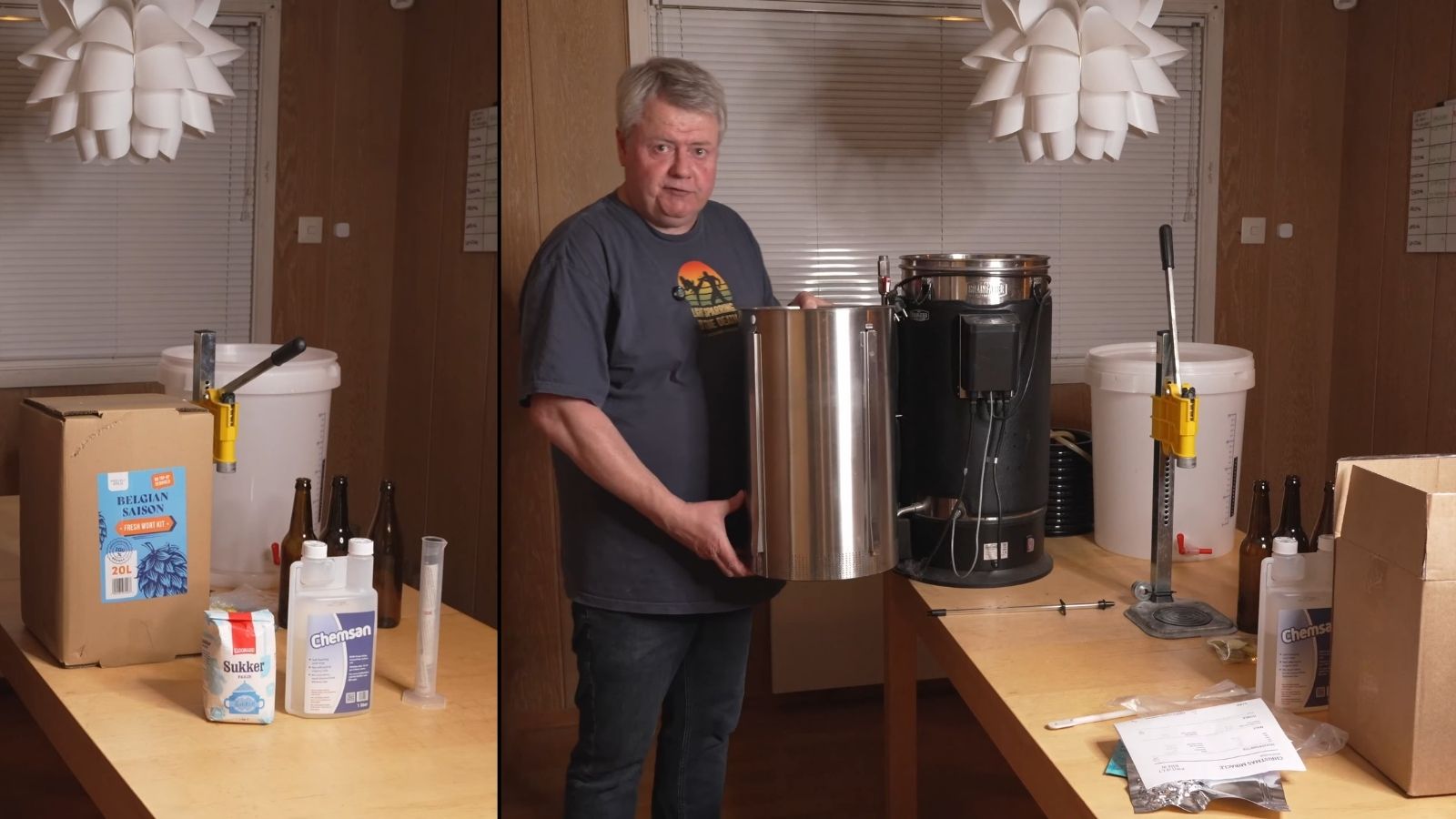
I use a Grainfather G30 v2, with the version 3 malt pipe – the one without a center tube. I actually prefer it that way. There’s more room to work when I’m stirring.
I didn’t start on an all-in-one system, though. If you’re curious how I went from BIAB to a homemade mash tun and eventually the G30, I’ve written up how that homebrew setup evolved.
The mash water was heating in the Grainfather while the sparge water was heating separately in my sparge water heater. The target was 68°C for dough-in.
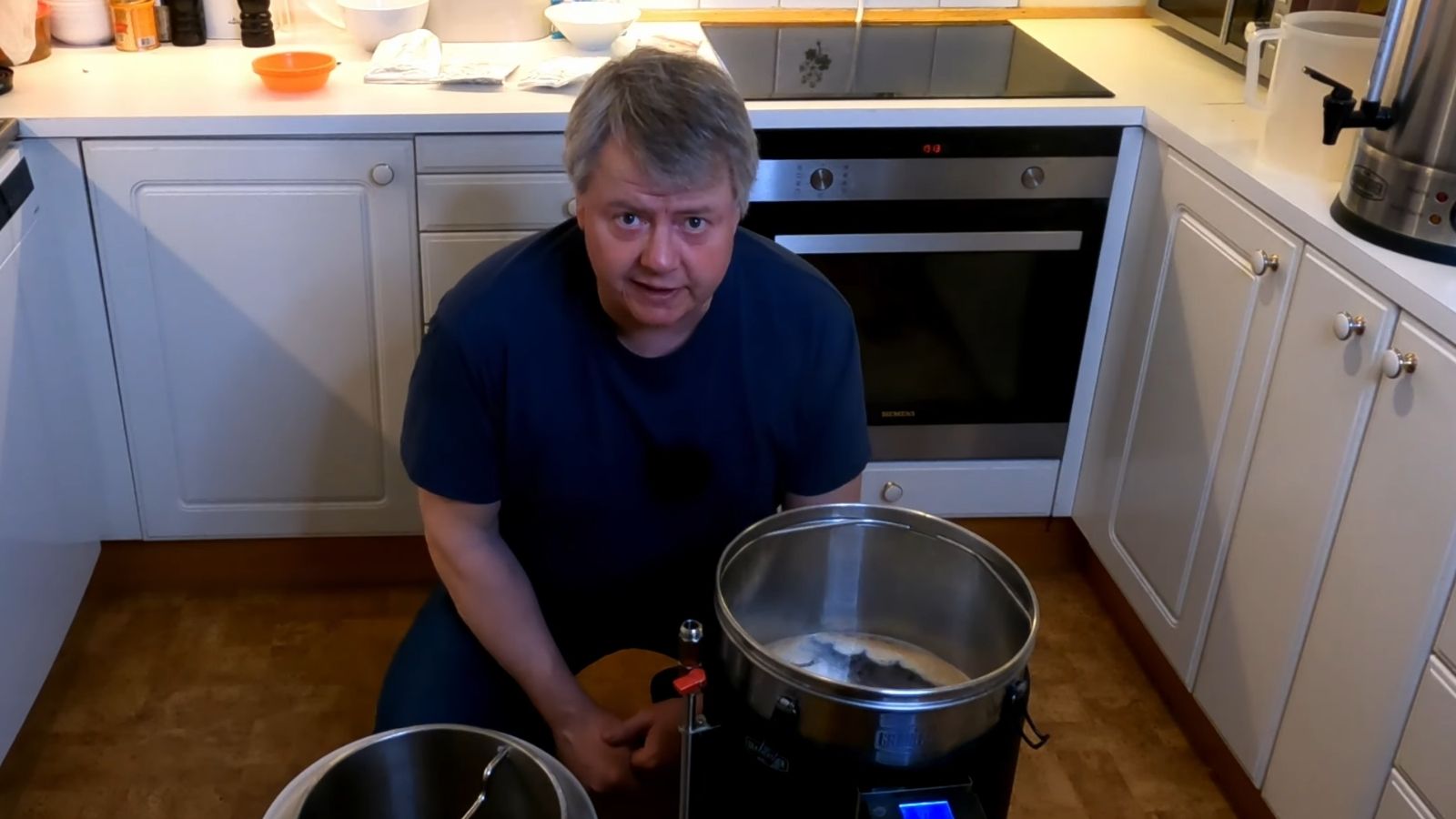
Once I hit the correct temperatur, the Grainfather beeped and put “Add grain” on the display, so in it went: about 5.5 kilos of malt into roughly 18 liters of water. I poured in around half the bag at a time and stirred well between additions.
Malt dust everywhere, as always.
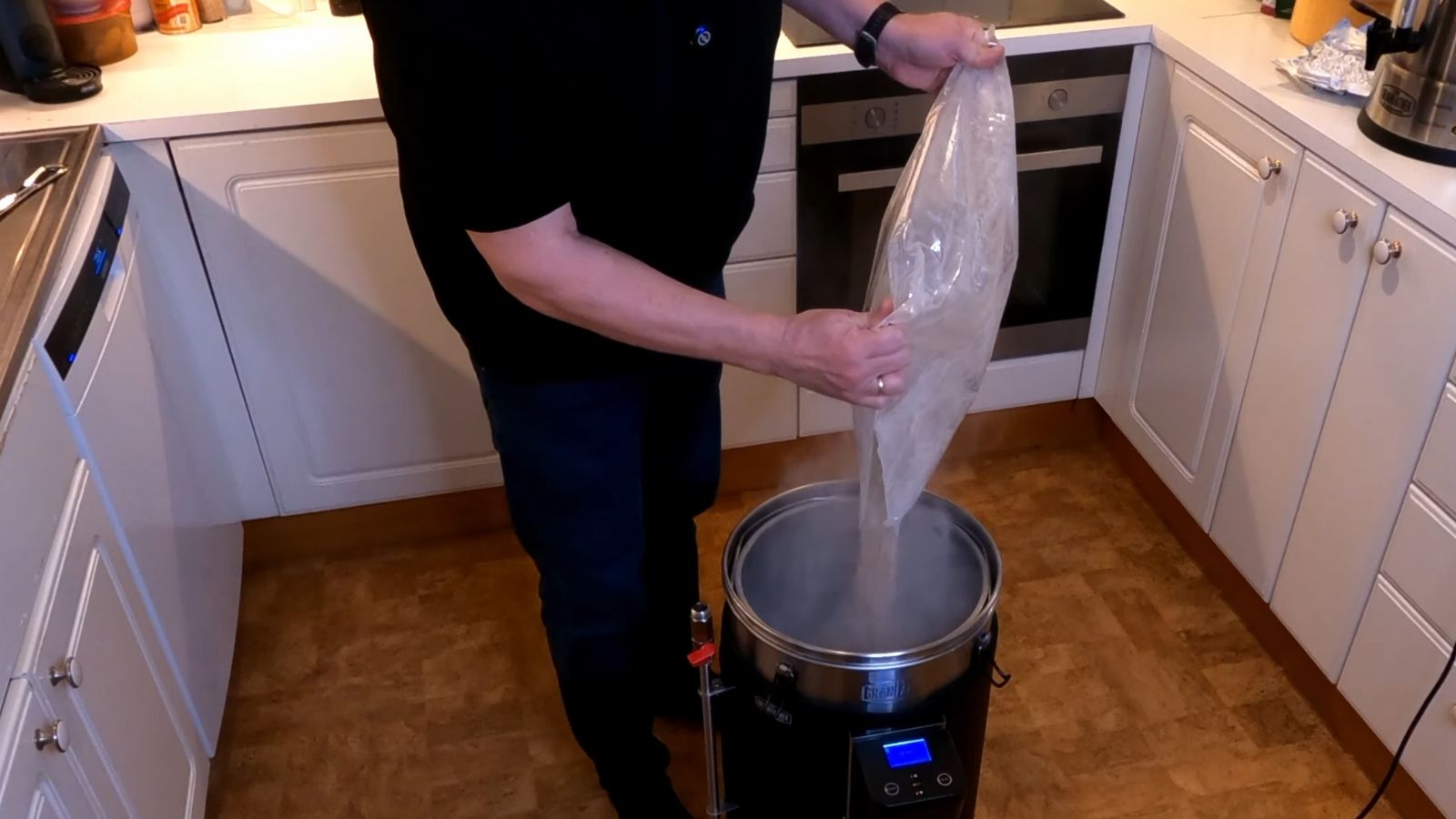
The stirring matters. Dough balls are basically dry clumps of malt that haven’t been properly wetted, and they can hurt extraction. So I keep stirring until I’m actually satisfied with the mash, not just until it looks roughly mixed.
With 18 liters in the mash and another 11 liters in the sparge water heater, that’s close to 29 liters total. For my setup, that gets me roughly 20 liters into the fermenter, which also happens to fit a Corny keg nicely.
The recipe calls for an hour of mashing. I let this one go for two, which is something I often prefer to do.
After the two hours, I ran a 15-minute mash-out at 78°C. The higher temperature greatly reduces further enzyme activity and makes the wort less viscous, which helps when it’s time to sparge.
Sparging
My sparge setup is basic: 11 liters of hot water and a regular three-liter measuring jug. No hoses or pump. I haven’t bought any of that, and this works fine.
I let the malt pipe drain until it’s almost just dripping. Then I pour one liter of sparge water over the grain, let it run through, pour in the next liter and repeat until the sparge water is gone.
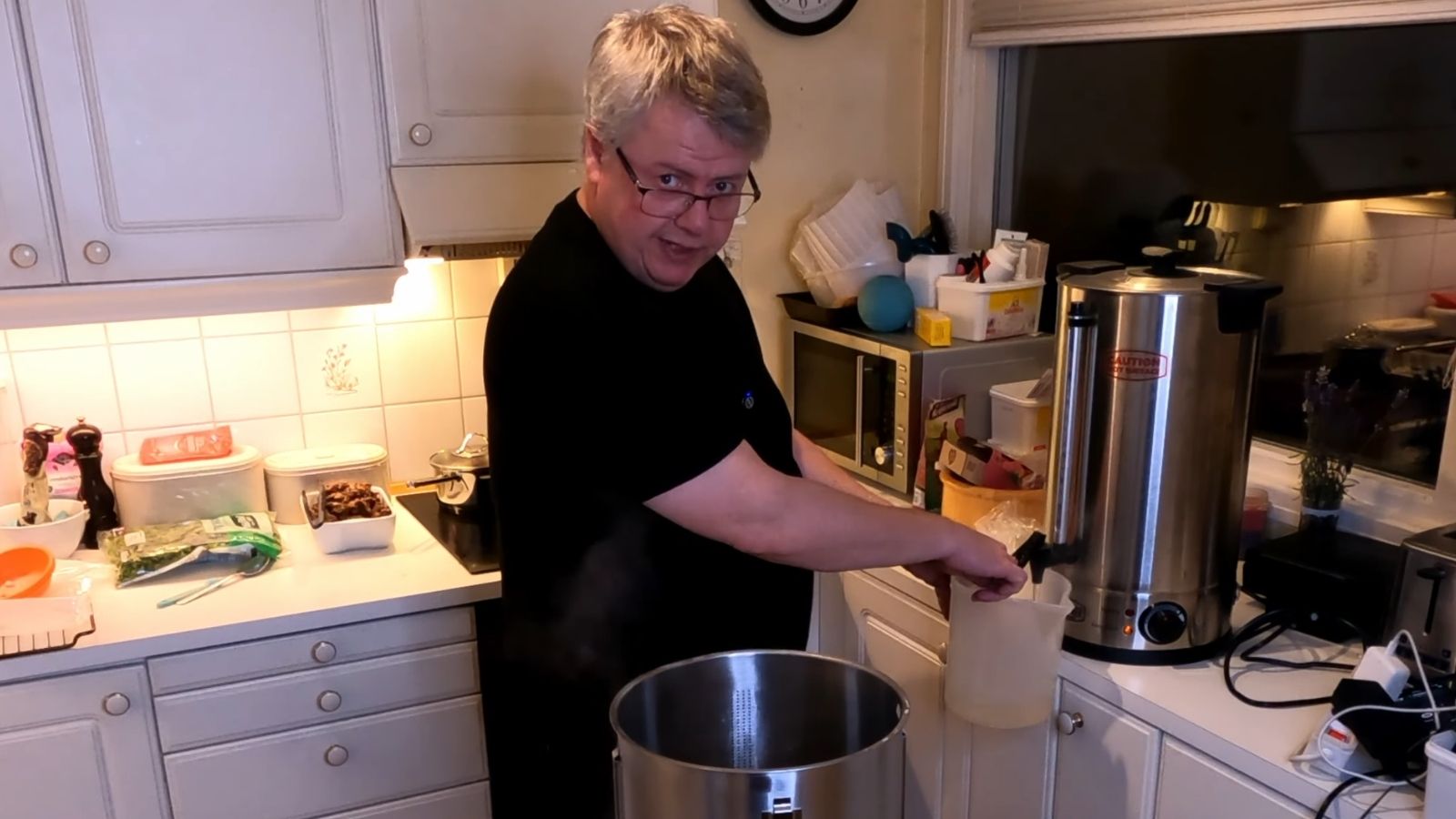
While I was doing that, the Grainfather was already heating towards the boil. For a while there was quite a lot going on at the same time: sparging by hand, the kettle temperature climbing past 97°C, and me trying to keep track of both.
Once the last sparge water had run through and the grain had drained properly, I lifted out the malt pipe, placed it in a bucket and pressed SET to take the Grainfather from around 97°C up to the boil.
Somewhere in the middle of all this I also had dinner going on the same kitchen counter.
That’s what happens when the kitchen is your only brew space.
The boil
Once I had a proper boil, in went the bittering hops: 10 grams of Columbus.
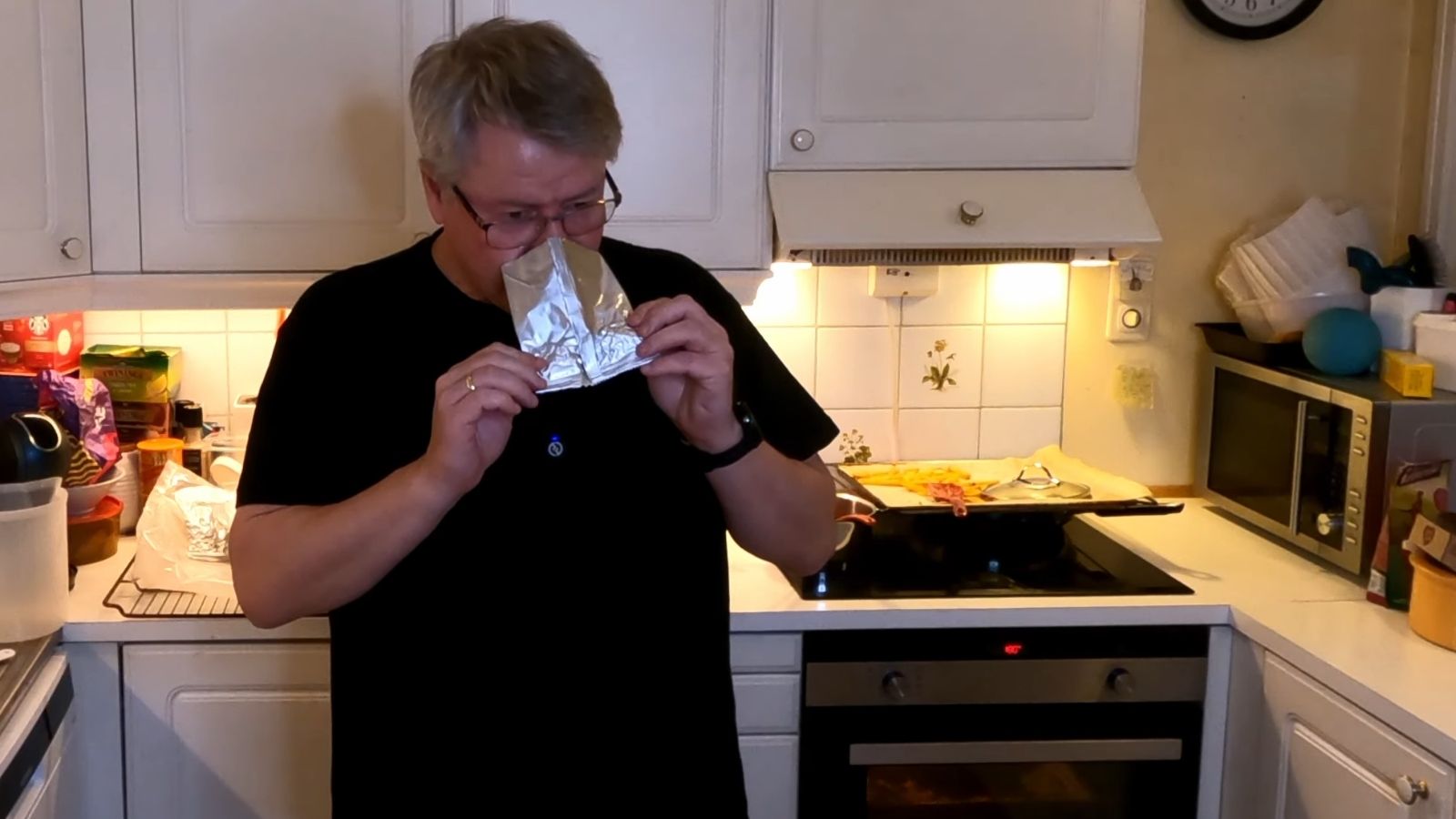
I consider it pretty much mandatory to smell the hops before they go in. There aren’t many things that smell better to a brewer.
I set the timer for 60 minutes. With about 15 minutes left, I added yeast nutrient and half a Protafloc tablet. With 10 minutes left, I added the 25-gram aroma hop addition.
At around seven minutes to go, I started sanitizing everything I’d need after the boil: the 30-liter Speidel fermenter, the sampling thief, the red Tilt hydrometer and the NorCal thermowell I use with the Speidel.
Everything was sanitized with Star San.
The thermowell fits through the top of the Speidel, and the temperature probe from my Inkbird slides down inside it. That lets me measure the temperature roughly in the middle of the beer rather than taping the probe to the outside of the fermenter. The same cap still leaves room for the airlock.
The Tilt itself goes directly into the beer.
I also grabbed a sip of beer while I waited.
Not homebrew, unfortunately. I was out of homebrew at the time, which is exactly what I was trying to fix by brewing this one.
With a few minutes left, I set up the counterflow chiller. It’s a simple Gardena hose setup connected to the chiller, nothing fancy.
My whole brewing rig sits on an old wheeled plant caddy, so instead of carrying the Grainfather around I can roll the whole thing over to where I need it.
Before running wort through the chiller, I took a sample straight from the kettle for an OG reading. I don’t completely trust the Tilt as my only gravity measurement, so I like having a manual hydrometer reading to compare it with.
I also ran hot wort through the counterflow chiller for about two minutes to sanitize it.
The wort is still close to boiling at this point, so the hoses, fittings and wort itself are an obvious burn hazard. This is not the part of the brew day where I want to rush things.
Chilling and pitching the yeast
The wort was still around 89°C when I turned on the cold water and started chilling.
I’d moved the Grainfather’s temperature probe into the Wortometer on the chiller outlet. That way I could see the temperature of the wort actually coming out of the counterflow chiller instead of the temperature of the wort still sitting in the Grainfather.
The number dropped quickly. Before long, the wort coming out was down to around 30°C, dropping rapidly down to pitching temperature of 18°C.
This batch is going to ferment at 18°C. I have a temperature-controlled fridge in the basement set to that temperature, with the Inkbird probe in the thermowell controlling it. I can also use the same fridge to cold crash the beer when fermentation is finished.
Then there was the OG sample.
The hydrometer was reading around 1.049 to 1.050, but the sample was still at roughly 56°C. That’s much hotter than I’d normally want for a hydrometer reading.
Brewfather corrected it to roughly 1.064, which would put it a few points above the recipe’s target of 1.060. With the sample that warm, though, I wouldn’t put too much weight on the last couple of gravity points.
At the time I wondered if the longer mash had something to do with it, but that was just my guess on the day.
I’ve drawn my own liter markings on the side of the Speidel, so I can keep track of how much wort I’ve collected. The target was 20 liters.
As I got close, I heard the Grainfather starting to gurgle. I tilted it slightly to one side to get the last bit out and ended up with 20.5 liters.
I was happy with that.
The Citra and Sabro packets for the dry hop went back into the fridge rather than the freezer. I know some people freeze their hops. Keeping mine in the fridge has worked fine for me.
Then it was time for the yeast.
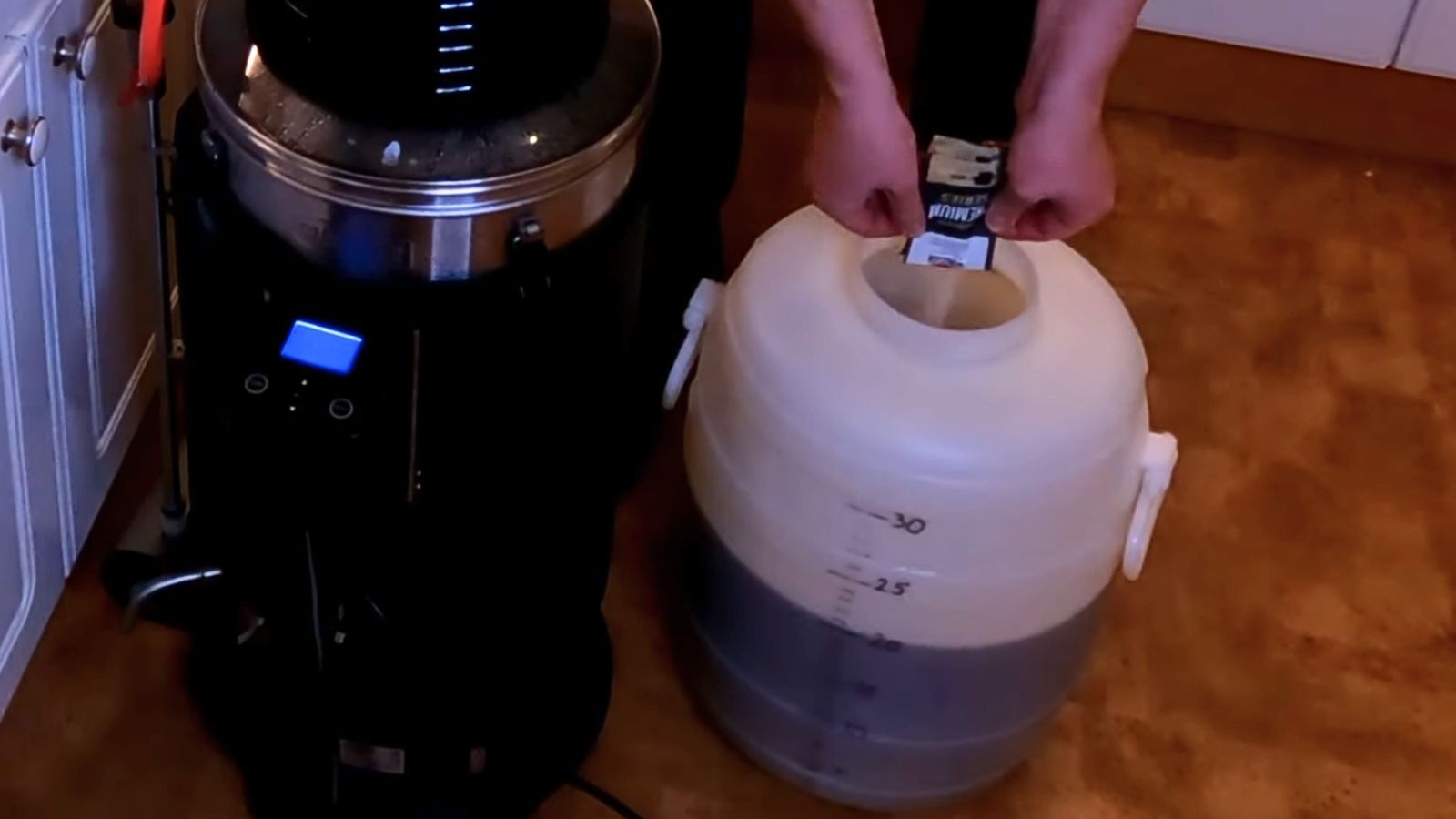
I pitched two packets of Windsor British Style Ale yeast, after giving both the scissors and the outside of the yeast packets a quick dip in Star San before opening them.
At the time I also had it in my head that the Windsor would add even more citrus, which is why I joked that I might as well be brewing an orange or a mandarin.
Looking it up afterwards, I had that a bit wrong. Lallemand describes Windsor as fruity and estery rather than specifically citrusy.
Lid on. Thermowell in place. Airlock on.
That was the Hoppy Amber brew day.
I had 20.5 liters of wort in the fermenter, ready for 18°C fermentation, with the Citra and Sabro dry hop going in after about a week.
Then it was just a matter of getting the fermenter downstairs and cleaning up the kitchen.
Cleaning is the boring part of brewing, but with 20.5 liters of Hoppy Amber on the way, I can live with that.
References
Lallemand Brewing — “LalBrew Windsor™” — LalBrew Windsor product information — Accessed 2026-09-16
Yakima Chief Hops — “Citra® Brand” — Citra hop variety information — Accessed 2026-09-16
Yakima Chief Hops — “Sabro® Brand” — Sabro hop variety information — Accessed 2026-09-16
Brew Your Own — “Lautering for All-Grain Brewers” — Brew Your Own mash-out and lautering reference — Accessed 2026-09-16
MoreBeer — “How to Read a Hydrometer” — MoreBeer hydrometer reference — Accessed 2026-09-16