Fresh Wort Kit vs All-Grain Kit: Two Versions of Svaberg IPA
I brewed two versions of Svaberg IPA: one fresh wort and one all-grain. Two very different brew days, two delicious beers. Here’s how they compared in the glass.
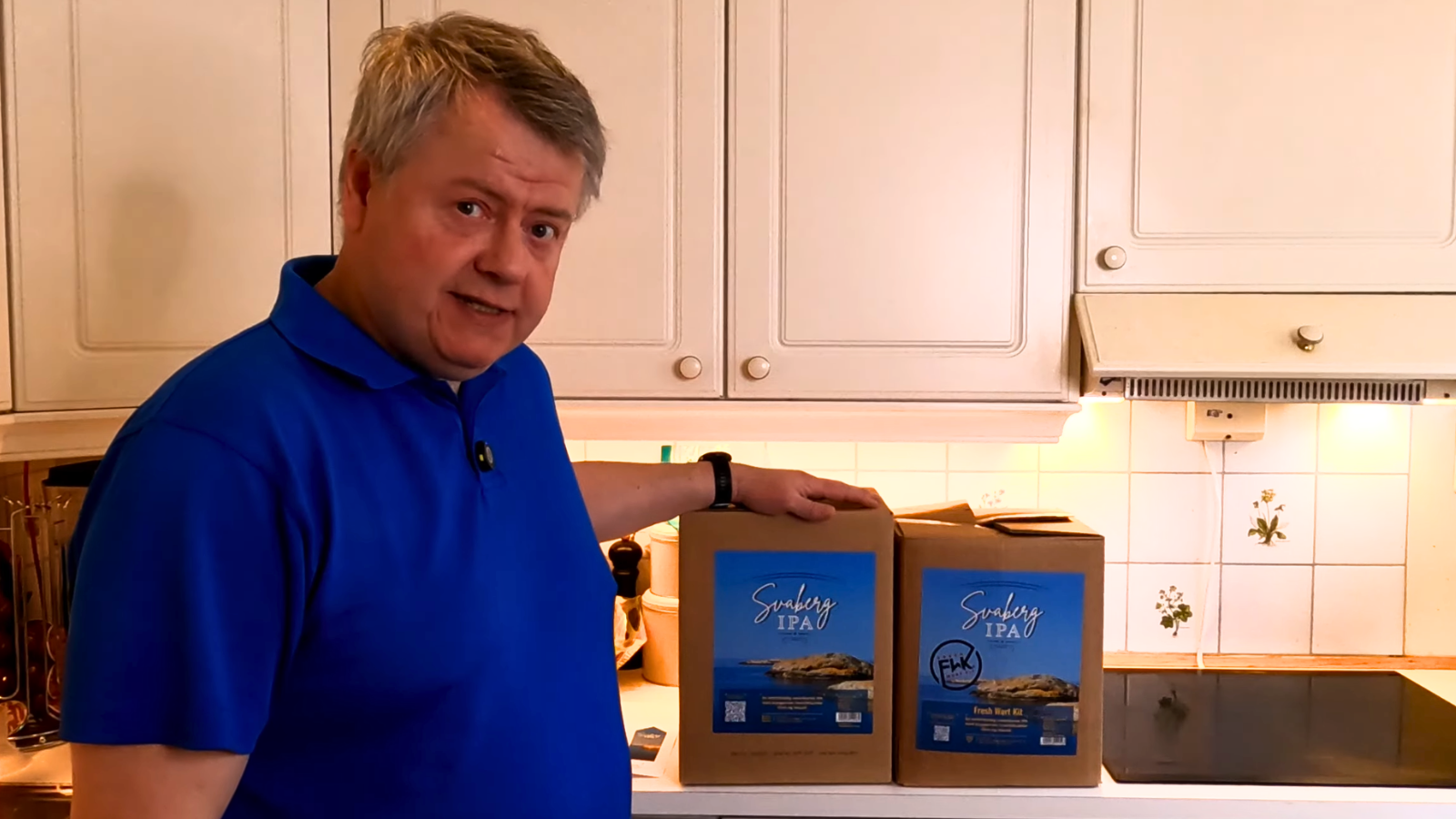
Fresh wort kit vs all-grain: how much difference does doing the full brew day actually make? I had two Svaberg IPA kits in front of me. One needed a full brew day. In the other, the wort had already been made for me.
Same name on the box. But once I looked at the recipes, they weren’t quite the same beer.
I’ve been brewing at home since 2015. I had used the fresh wort version two or three times and liked it a lot, but I had never actually brewed the all-grain version. So I brewed both on the same day to see what the extra work would give me.
This wasn’t a controlled experiment, and I’m not going to pretend it was. It’s what I did, what I measured and what I noticed.
What I was comparing
Both kits came from Ølbrygging.no, a Norwegian homebrew shop. Svaberg IPA is a light, pale IPA built around Citra and Mosaic, and it’s one of my favourite IPAs.
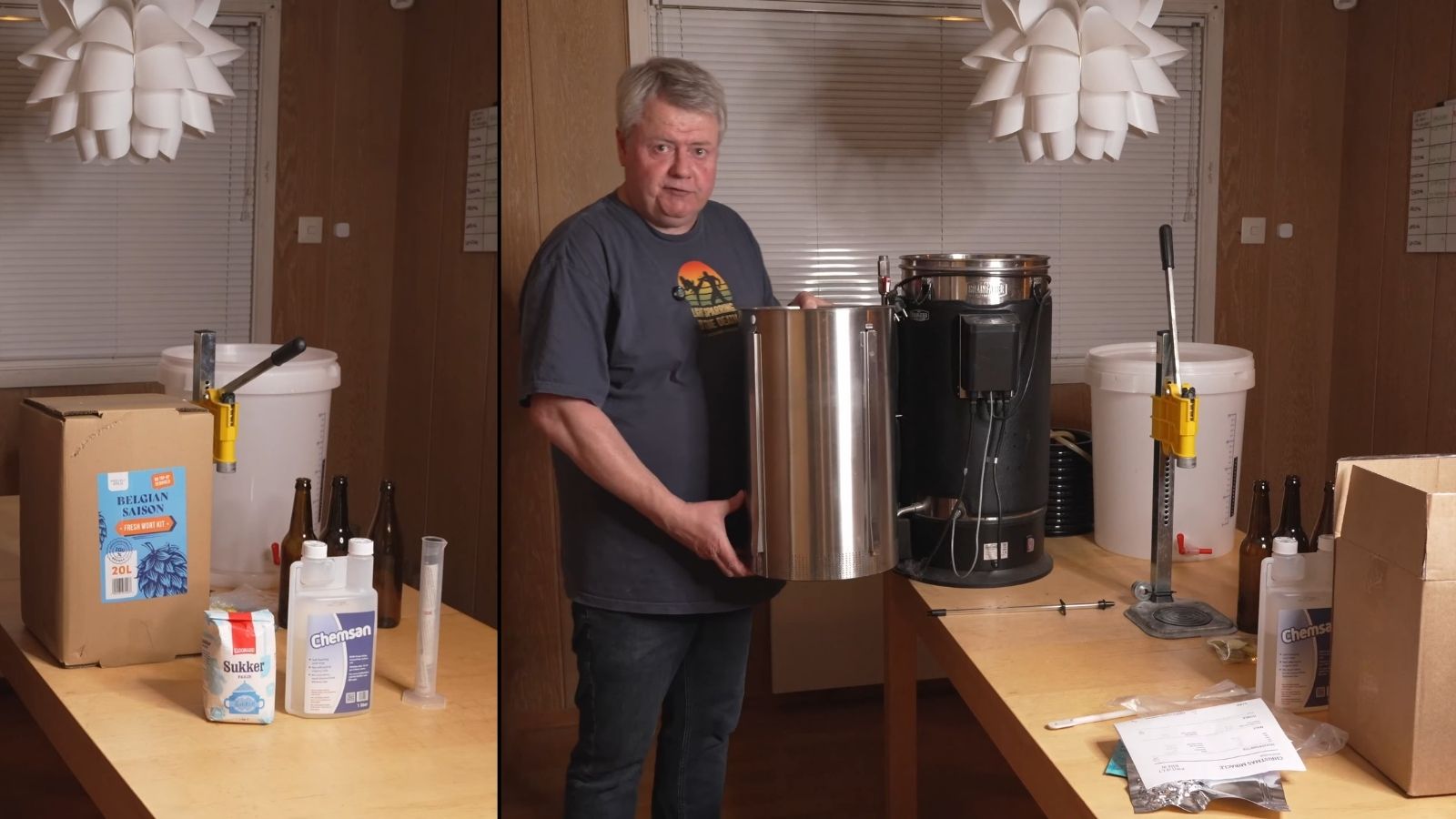
A fresh wort kit is a kit where someone else has already made the wort — the sweet liquid that eventually becomes beer. You skip the mash and boil and start by getting the finished wort ready for fermentation. That difference also changes how much equipment you need. I’ve broken that down separately in my guide to homebrewing equipment for fresh wort kits, extract and all-grain brewing.
This particular kit came with 15 liters of wort. The instructions said to add 5 liters of water for about 20 liters in the fermenter. Then I had to pitch the yeast, ferment the beer and dry hop it.
The all-grain kit contained the malt, hops and yeast, but I had to make the wort myself. It also gave me about 20 liters in the fermenter, which suits my 19-liter Cornelius kegs.
Both used Lallemand BRY-97 dry yeast.
The two kits were already different on paper
| Fresh Wort Kit | All-Grain Kit | |
|---|---|---|
| Volume to fermenter | About 20 L (15 L wort + 5 L water) | About 20 L |
| Color | 17 EBC | 10 EBC |
| Expected OG | 1.060 | 1.063 |
| Expected FG | 1.010 | 1.012 |
| Expected ABV | 6.5% | 6.7% |
| Yeast | Lallemand BRY-97 | Lallemand BRY-97 |
| Dry hop | 30 g Citra + 30 g Mosaic (60 g), last 3 days before packaging | 50 g Mosaic, 5 days |
| Work before fermentation | Transfer wort, add water, pitch yeast | Mash, sparge, boil, hop, chill, pitch yeast |
Figures are from the two recipes I had. EBC is the European color scale, where a higher number means a darker beer. OG and FG are the gravity readings before and after fermentation.
Those different dry-hop schedules are one reason timing is worth thinking about, although longer doesn’t automatically mean better. I’ve covered that in more detail in my guide to dry hopping.
The fresh wort kit was specified to be darker and a little weaker, and it used a different dry hop for a different number of days. So whatever differences I found later, the brewing method was only one of the things that changed.
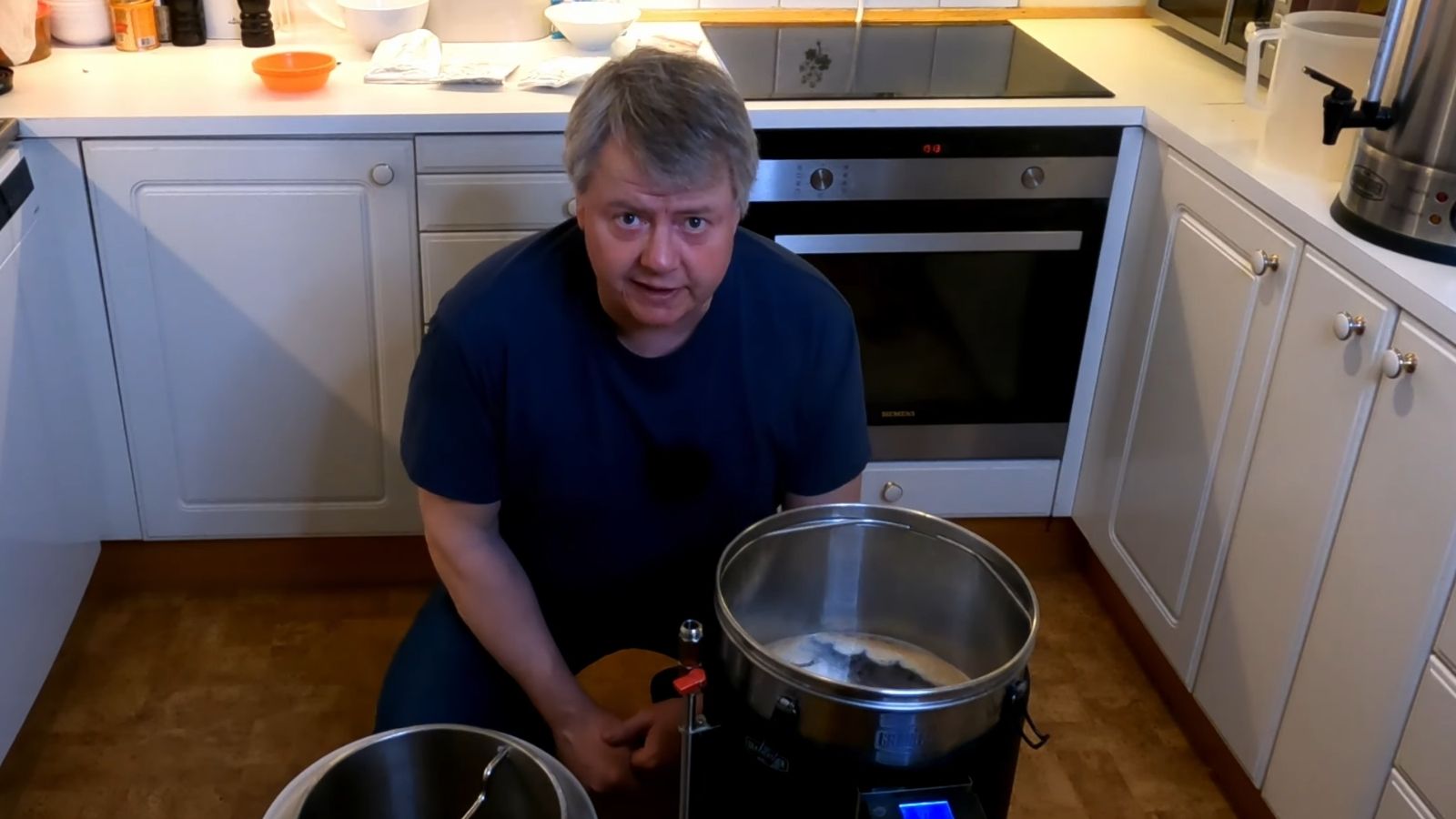
I filmed the full brew day as well. The video is in Norwegian, with subtitles available in English, and shows both versions being brewed on the same day:
Fresh Wort Kit vs All-Grain: The Brew Day Difference
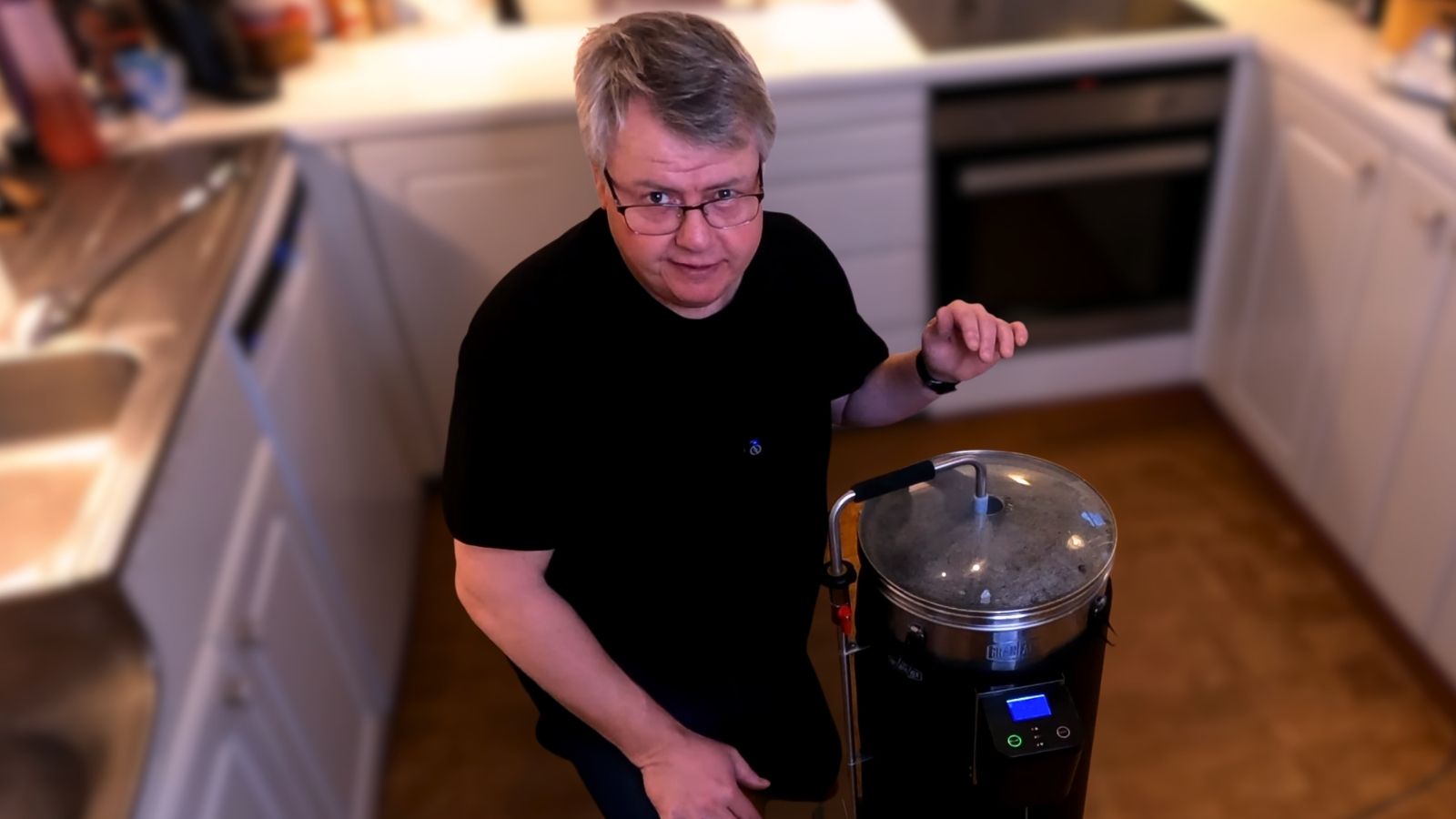
The all-grain batch meant a full brew day on my Grainfather G30: mash, sparge, boil, hop stand and chill.
I mashed at about 65°C. The recipe said one hour, but I gave it about an hour and a half because that suited my day better. That was my call, not something the recipe needed.
I spent part of the mash in the car, on a practice drive with my oldest daughter.
We both survived.
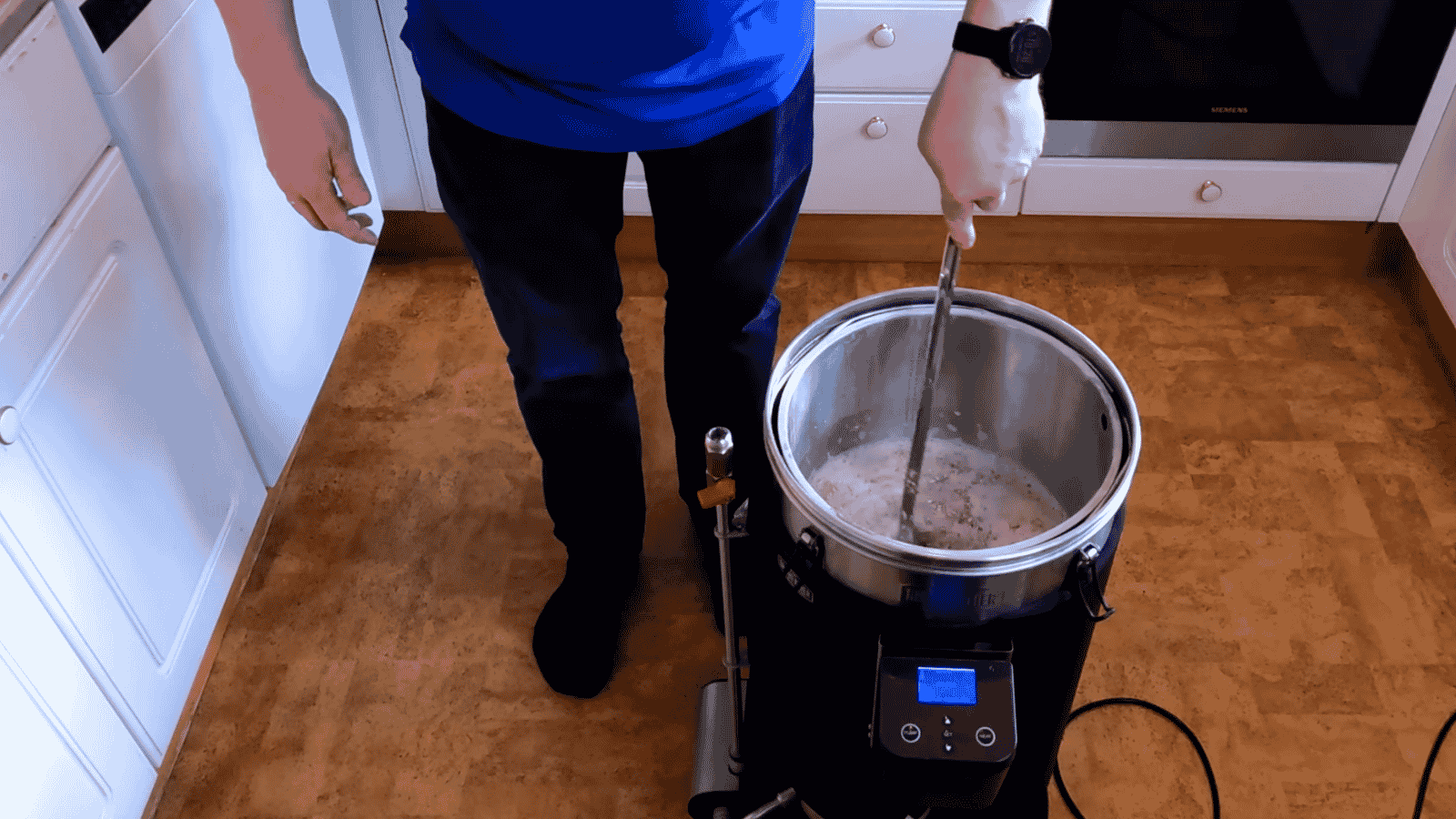
For the hop stand, I cooled the wort to about 85°C, added the hops and left them for about 15 minutes before continuing the chill. I transferred the wort to the fermenter at about 20°C and ended up with exactly 20 liters.
I use a Grainfather G30 for my all-grain brewing; my current setup is listed on my homebrewing gear page, and I’ve written separately about how that setup evolved from BIAB to the G30. I also used the same basic brewing process for my Hoppy Amber brew day.
The fresh wort batch was a very different kind of job.
The wort comes in a 15-liter bag, which is heavy and awkward. I’ve learned that it helps to have a plan before I start pouring. This time it went surprisingly well, with very little spilled.
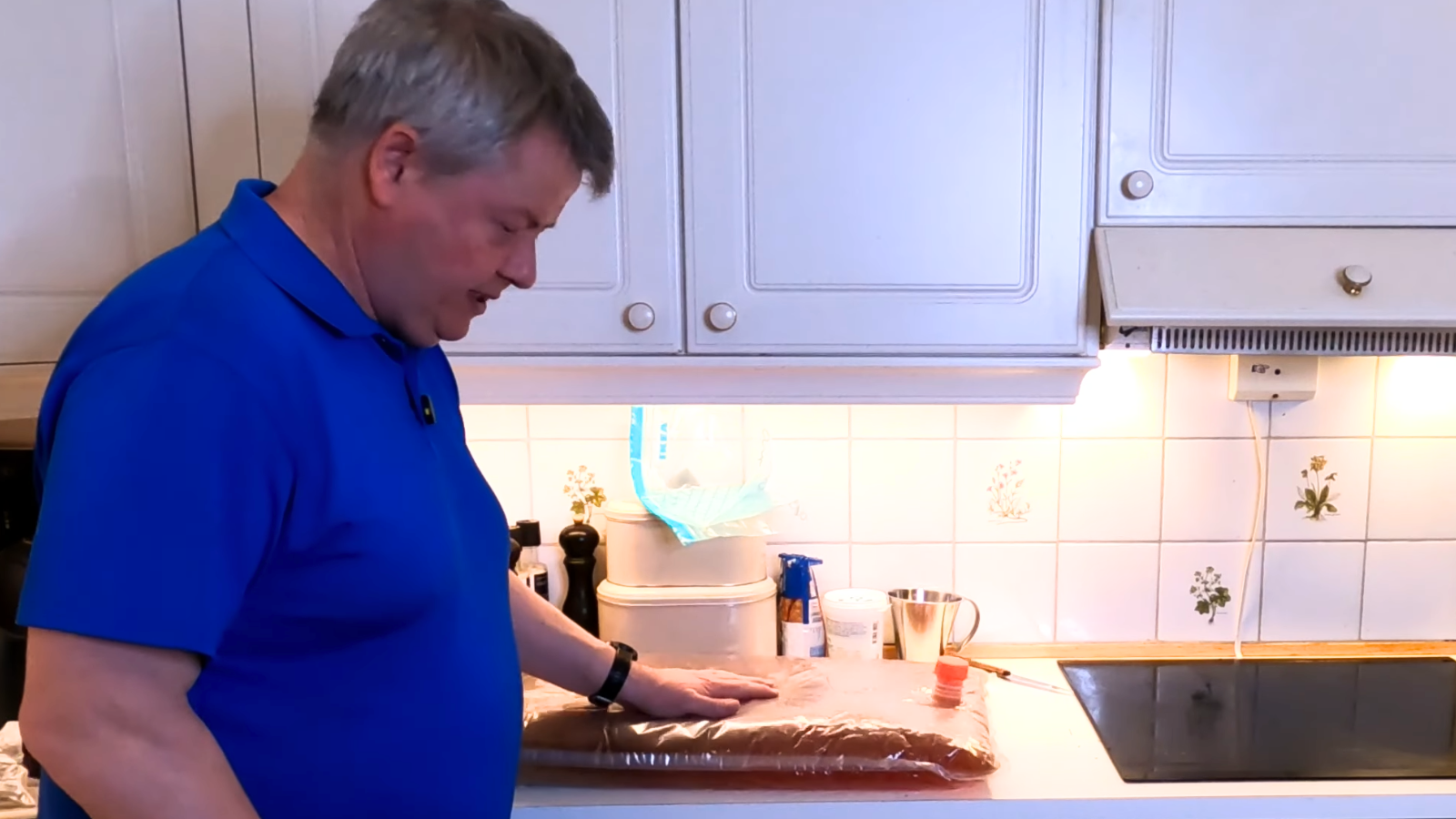
I topped it up with 5 liters of tap water, just as I had on earlier batches of the same kit, pitched the yeast and dropped in a Tilt hydrometer.
I got the fresh wort batch into the fermenter and ready to go while the all-grain batch was sitting through its 15-minute hop stand.
Both fermenters were already sanitized. Compared with the all-grain batch, most of the brew day was simply gone with the Fresh Wort Kit.
The all-grain side also means dealing with hot wort, pumps and hoses. That’s not the part of a brew day where I try to save time by rushing.
Fermentation wasn’t identical either
I only have one temperature-controlled fermentation chamber: a fridge with an Inkbird controller and a heating pad that keeps the temperature around 20°C quite steadily.
The all-grain batch went in there.
The fresh wort batch went into my basement, which normally sits around 19–20°C but isn’t actively controlled. Both batches were meant to ferment at about 20°C, and I hoped the difference wouldn’t matter.
It wasn’t quite equal. During the first few days, the fresh wort batch ran somewhat warmer than I wanted.
BRY-97 is a dry ale yeast. Lallemand lists its fermentation range as 15–22°C and describes its aroma as “neutral with slight ester.”
My own experience has sometimes been a bit more energetic. The previous time I used it, fermentation was vigorous enough that I had to wipe out the fermentation chamber afterwards.
I’ve only used BRY-97 a few times, but in those beers I’ve also picked up a citrusy character. That’s my impression, not Lallemand’s description.
I measured the two batches differently.
For the all-grain batch, I took hydrometer readings before and after fermentation and calculated the alcohol from them.
For the fresh wort batch, I skipped a normal OG sample after adding the water. I wasn’t sure the water and wort had mixed completely, so a sample from one spot could have been misleading.
Instead, I used the Tilt’s starting and finishing readings to estimate the alcohol. I treat that number as approximate for the same reason.
Both kegs were empty by August
I brewed both batches in mid-March 2025. By the time I finally got around to wrapping up the comparison that August, I’d planned to sit down with two full glasses.
Both kegs were empty.
That may be the best review a beer can get.
It’s not much help for a comparison.
I had tasted the beers side by side earlier and taken notes, so I wasn’t starting from nothing. It wasn’t a blind test, and I didn’t score anything. What follows comes from those notes and what I remember.
What ended up in the glass
Color
The fresh wort batch ended up a little darker and the all-grain batch a little lighter.
It wasn’t dramatic, but the difference was clear when I had the glasses next to each other.
The kits were already specified to produce different colors — 17 EBC against 10 — and the finished beers followed that direction. I don’t know why the two recipes were formulated differently.
Strength
The all-grain beer ended up at about 7.1%, while the fresh wort beer came out at about 6.0%.
The kit targets were 6.7% and 6.5%, so the all-grain batch landed above its target and the fresh wort batch below.
At the time, I wondered whether my mash had produced more fermentable sugar than expected, and whether some of the gap could simply be measurement error.
Those were guesses.
The readings put the beers about one percentage point apart, but I wouldn’t put too much weight on the exact numbers.
Flavor and mouthfeel
Both beers were very good.
I want to say that first, because it’s easy to lose in a comparison.
They were good in different ways.
The all-grain version had more body, by which I mean it felt fuller in the mouth. It also tasted more complex and felt more robust.
The fresh wort version was lighter and more straightforward, with a cleaner, simpler flavor. It was easy to drink — the kind of beer that just goes down without much fuss.
The recipes weren’t identical, the dry hopping differed, the finished beers ended up at different strengths, and they didn’t ferment under identical conditions.
With all of that in play, I can’t isolate one cause for what I tasted.
In my two batches, the all-grain version felt fuller and more complex.
I wouldn’t turn that into a rule about all-grain brewing.
What I took from it
Fresh wort removed most of the brew day.
With the all-grain kit, I handled the whole brewing process myself: mash, sparge, boil, hop additions and chilling.
Both beers were very good, and I’d happily buy and brew both kits again.
For me, the all-grain kit was worth the extra work. That’s still the way I prefer to brew when I have the time, because I enjoy doing the whole process myself.
But the fresh wort kit makes a lot of sense when I’m short on time, or simply don’t feel like spending a whole day brewing. It reminded me how little brew-day work I needed with this particular kit to end up with a beer I genuinely enjoyed.
Neither keg lasted until my final comparison.
That probably says more about whether I’d brew them again than any score would.
References
Lallemand Brewing — “LalBrew BRY-97™” — https://www.lallemandbrewing.com/en/united-states/products/bry-97-west-coast-ale-yeast/ — Accessed 2026-09-24
Lallemand Brewing — “Lallemand Brewing Catalog” — https://connect.lallemandbrewing.com/wp-content/uploads/2024/01/Lallemand-Brewing-Catalog-ENG-8.5×11-Nov2023-digital.pdf — Accessed 2026-09-24